EN-B
Beginner to intermediate
Reviews of EN-B class gliders.
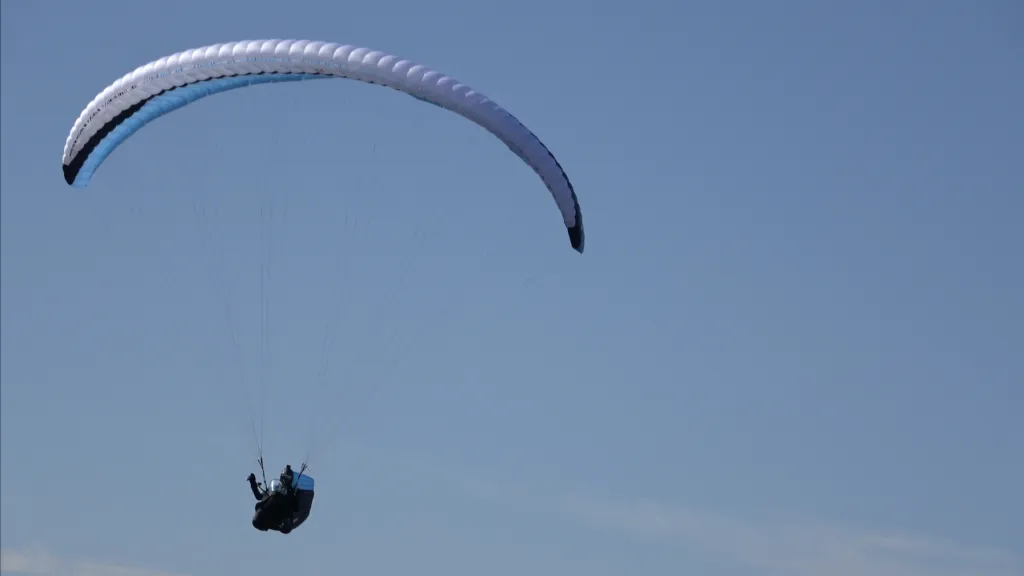
GIN Bandit 2 — Mid-B Feel, High-B Stage
The first strength that jumps out is the glide. Fair enough — it packs a class above its glide performance into a mid-B price. But what lingers longest in your fingertips after the flight is, unexpectedly, the brakes. The way it turns in exactly as far as you pull, tightening and releasing only as much as you ask. That sensation is written nowhere on a spec sheet, yet it never leaves your hands the whole flight. Maybe the value pilots most often overlook when choosing a mid-B is exactly that feel.
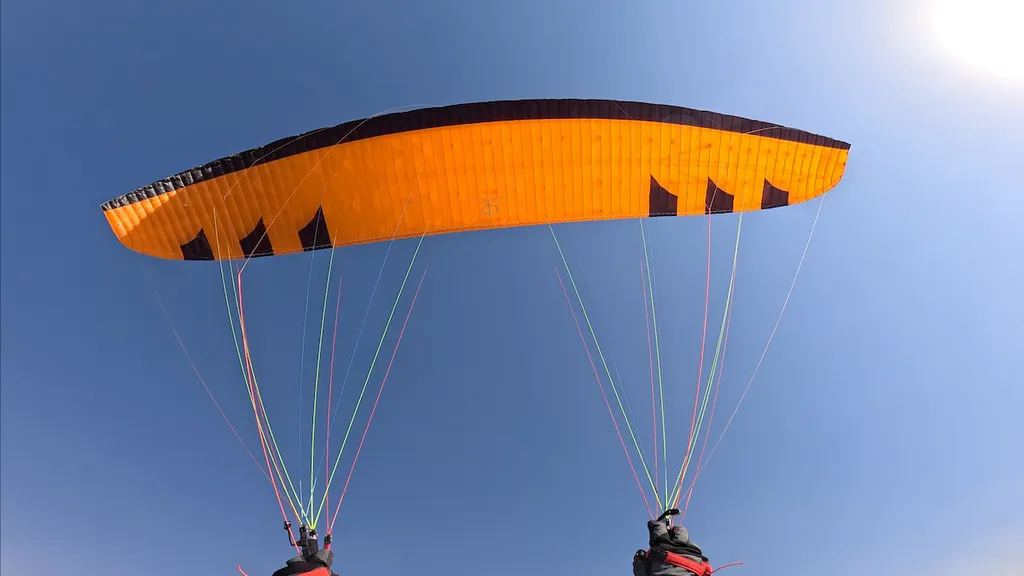
PHI Maestro 3 & Maestro 3 Light — Defining the Joy of the High-B
The experience the Maestro 3 offers is unambiguous. Before you make the jump to the C class, it lets you taste the glide and climb of a two-liner ahead of time. The glide stands shoulder to shoulder with the Delta 5, and the climb, loaded heavy, edges past accomplished C-class two-liners. What makes it valuable is the margin on which that performance is earned. It hands back C-class numbers without asking you to shoulder C-class risk. For the pilot hesitating to step up a class, the Maestro 3 delivers that class's reward in advance, within the comfort of a high-B.
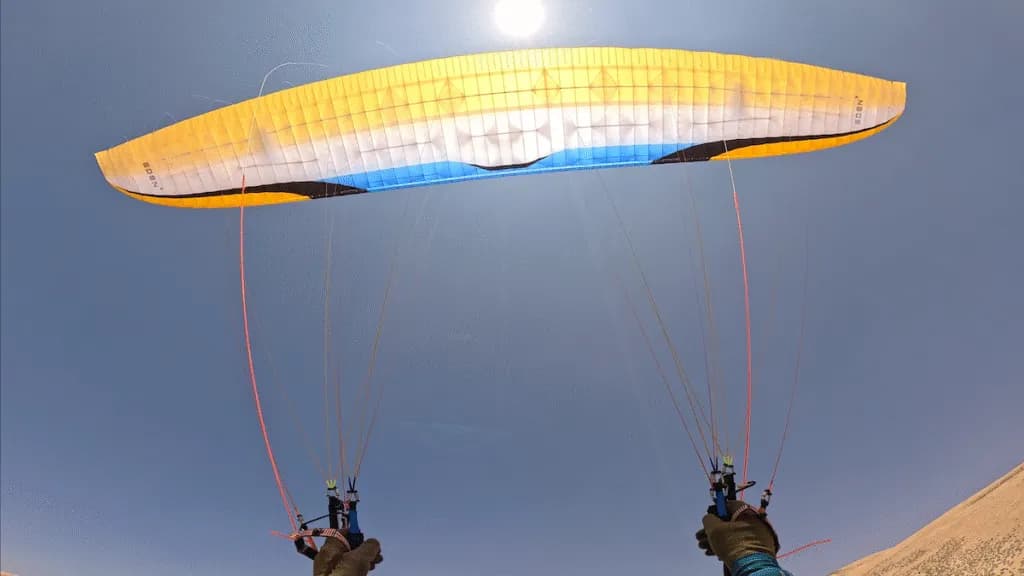
MAC PARA Eden 8 (23): The Semi-Light XC Machine That Takes High-B Pilots Further
The Eden 8 packs solid, hard-to-collapse stability and a glide that comes alive the harder you push the bar into a single wing. Climb in weak air, glide at both trim and full speed — on every metric that separates one XC wing from another, this one points to the top of its class. That reward, though, comes with a condition. The 5.93 aspect-ratio canopy is clearly busier than the Eden 7, and it assumes an experienced pair of hands that can read its movement and keep it in check. In the end, the Eden 8 is a wing for the pilot who wants D-class distance while staying inside the B-class safety net. If you want to fly further without crossing into C, this glider is the most realistic next step.
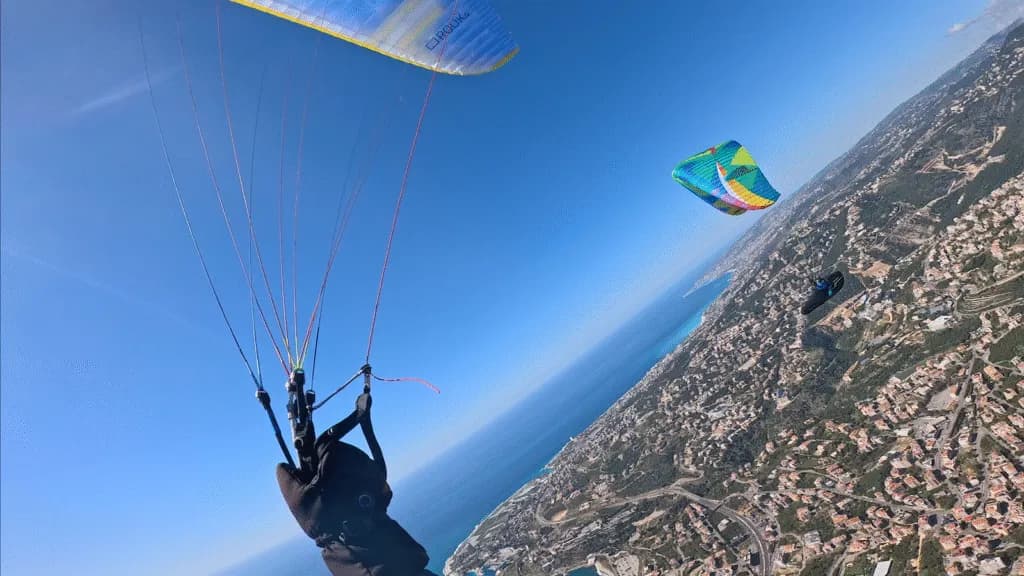
BGD Base 3 M — Mid-B Comfort That Belies Its 5.7 Aspect Ratio
The Base 3's strength is clear. Despite a 5.7 aspect ratio, it keeps a pilot less tense in rough air. But that comfort doesn't simply arrive on its own. On days when strong thermals and a valley breeze stack up, you have to fill the all-up to the top of the range before the canopy firms up — and only then does the ease BGD intended come alive. Standing one step back from the performance race, the Base 3 does a different sum. It takes the tension off, and that ease stretches your flying time. Less a wing that takes you farther than one that keeps you up longer.
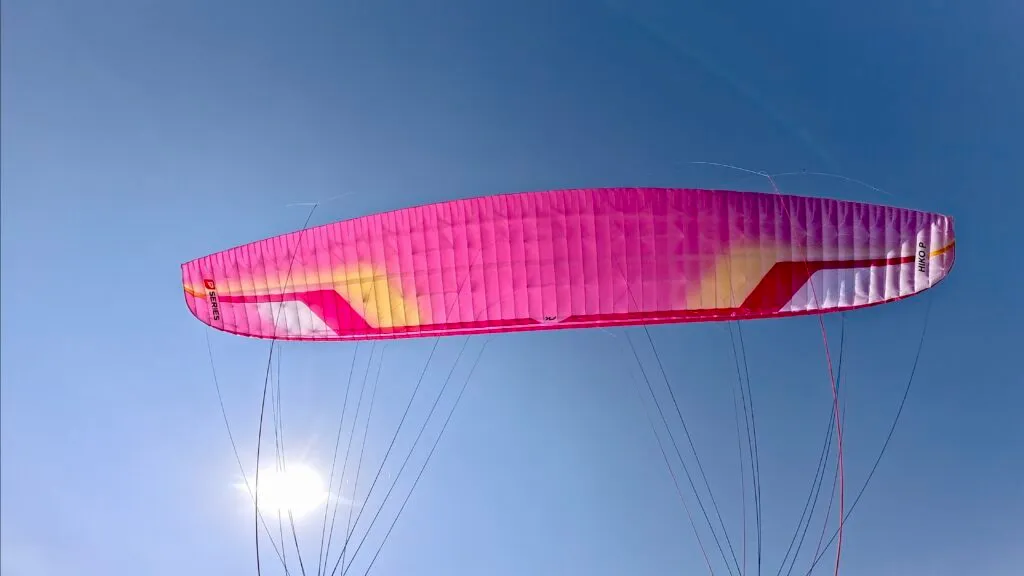
Niviuk Hiko-P: A Mid EN-B That Sheds Weight Without Touching Performance
Lightweight wings usually shed the fun of flying along with the weight. The Hiko-P refused that trade. The real achievement isn't the weight it dropped. It's that it took the weight off while leaving the handling and the climb at full main-wing strength. A lightweight wing that you can walk up to fly — and that still makes you smile after you land — is a rare thing.
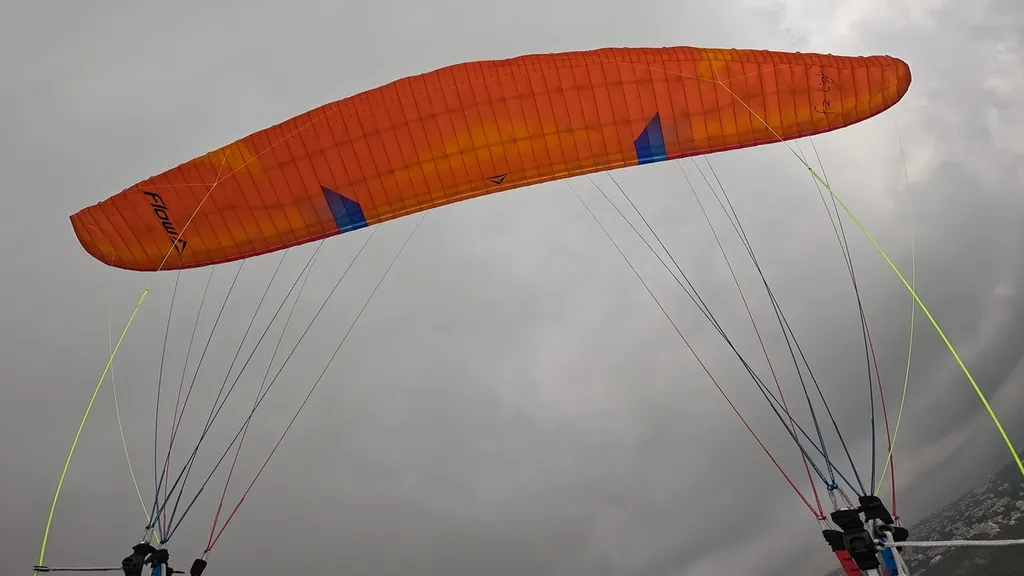
FLOW Freedom 2 Light — A Lightweight High-B That Wins on the Climb
The Freedom 2 Light is calmer and tauter in its behaviour than the standard-cloth version. Its ability to keep the wing parked overhead on C steering matches the good B's too. The big ears are stable, and they reopen smoothly and evenly with no pilot input. Wingovers store a fair amount of energy, which, depending on the hands flying it, can become a weakness. Boil this wing down to one word and it comes to the climb. It isn't a High-B that leads with speed; it's a glider that keeps you pinned to cloudbase on lift and the glide to match. If you need a faster trim there are other options, but for the pilot who wants an easy launch off a tight strip and to squeeze a thermal to the last drop, a companion like this is hard to find.
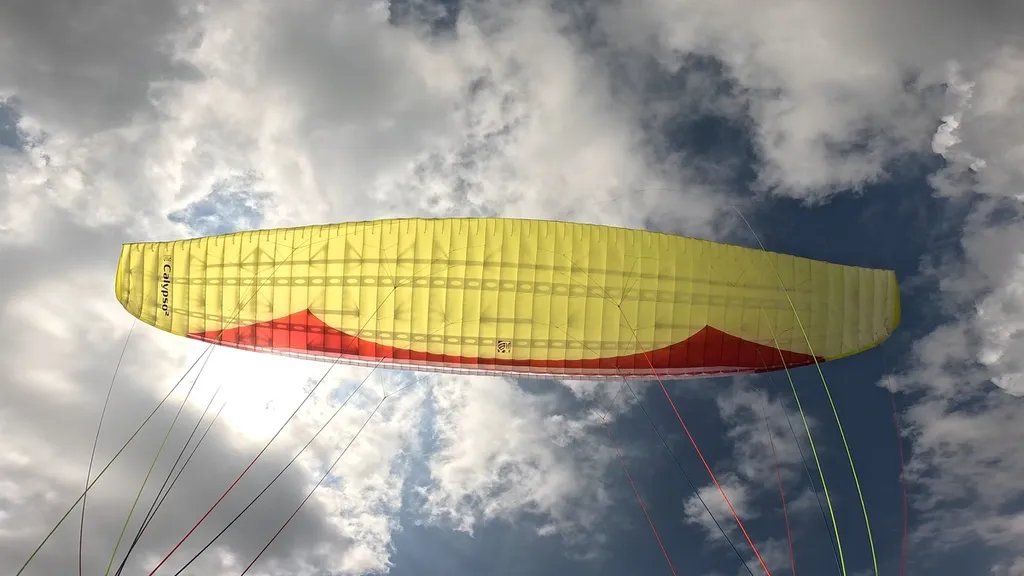
Gin Calypso 2 (S) — An Entry B That Lands You With a Smile
What the Calypso 2 offers is not flashy performance but trust. Even in turbulence the canopy holds with an even, safety-net composure, the pitch stays settled, and the roll keeps to a line you can manage at any level. While the passive safety quietly supports the pilot, the pilot can stand on that trust and move into active flying — coring tight, working the bar often. But read this ease as nothing more than a passive safety device and you have seen only half of it. The 20cm brake delivers agility above the class average, and dig deeper to 30cm when you want and the wing still holds together. A glider that protects the beginner and, as that beginner grows, answers with more active handling in return. That is why the smile is still there after you land.
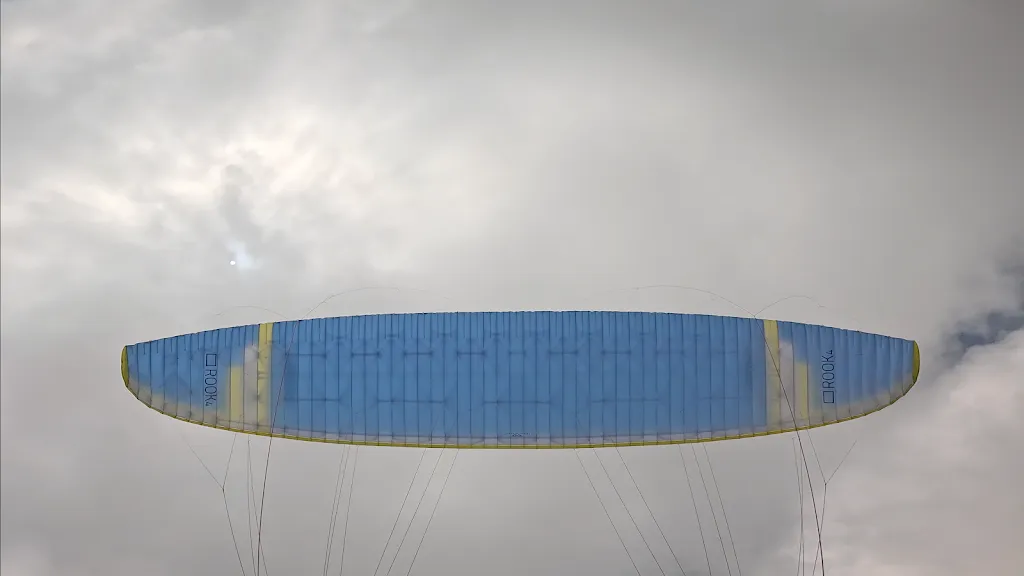
Triple Seven Rook 4 MS — A High-B That Wins on Efficiency
The Rook 4's strength runs in two strands: the entry feel of the nose lifting first in weak thermals, and the trim-glide efficiency that leads the class. When the two interlock, you get a wing that climbs out earlier on weak days and then slides further. What it gives up in exchange is a measure of smoothness in its behaviour. Bassil himself concedes that its movement and roll are a shade less comfortable than the Maestro 2, and that for sheer cosiness the Mentor 7 S may have the edge. That splits the pilots it suits. If you're after the most comfortable high-B, other options serve you better — but for the intermediate XC pilot who wants to step up gliding efficiency without sacrificing much comfort, it fits exactly. This is less a wing shaped for comfort than one whose comfort balance has been tuned with precision in pursuit of efficiency.

UP Kangri X — A 2.5-Liner That Sheds Weight but Keeps the High-B Information Stream
The Kangri X's strength is clear. For a high-B it is anything but dull: it reads the air sharply through brakes and risers, and turns that information straight into direct steering. Its place is with the broad band of pilots who want both the fun of a high-B and the information of a C. But that information is not free. The feedback rising relentlessly through brakes and risers is a reward for the pilot who knows how to read and use it, and a burden for the pilot whose hands are still busy. This is not a wing that relaxes you with comfort; it is one that hands the conversation lightly back to a pilot who is ready to enjoy talking with the air.
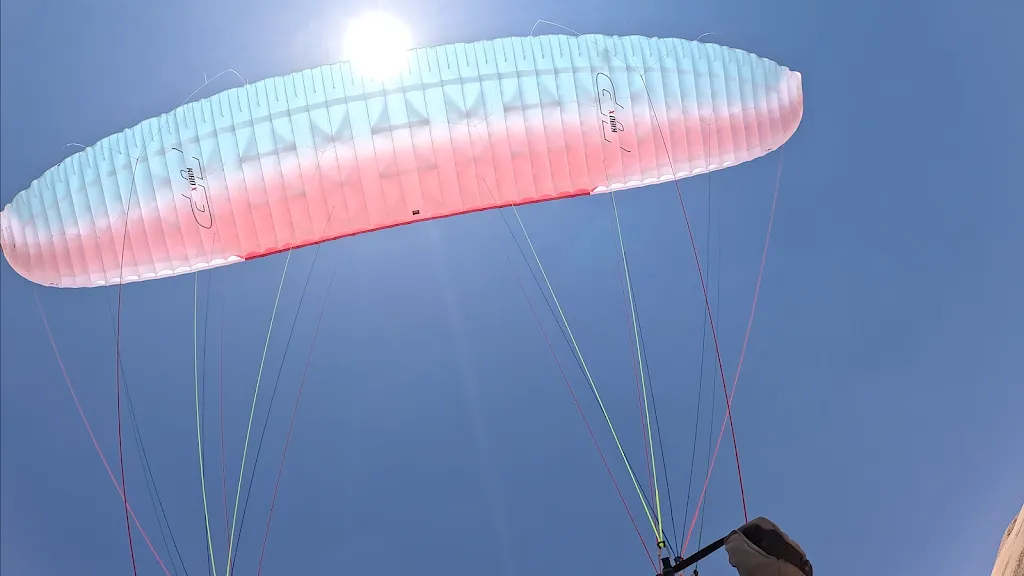
UP Kibo-X (size S): UP's New mid-B That Competes on Feedback
The Kibo-X is a wing whose controls never stop talking to you. From the direct, immediate turn, to the ability to dig into a narrow core, to easy and stable big ears, it is designed for the pilot to read the wing's state through the fingertips and handle it actively. But this feedback does not pay off equally for everyone. For a pilot with busy hands it becomes a tool for reading the lift; for a pilot who wants the wing to simply float on its own, it can feel restless. This is less a mid-B judged by performance ranking, and more a mid-B that hands back exactly as much hand-feel as you put into flying it actively.
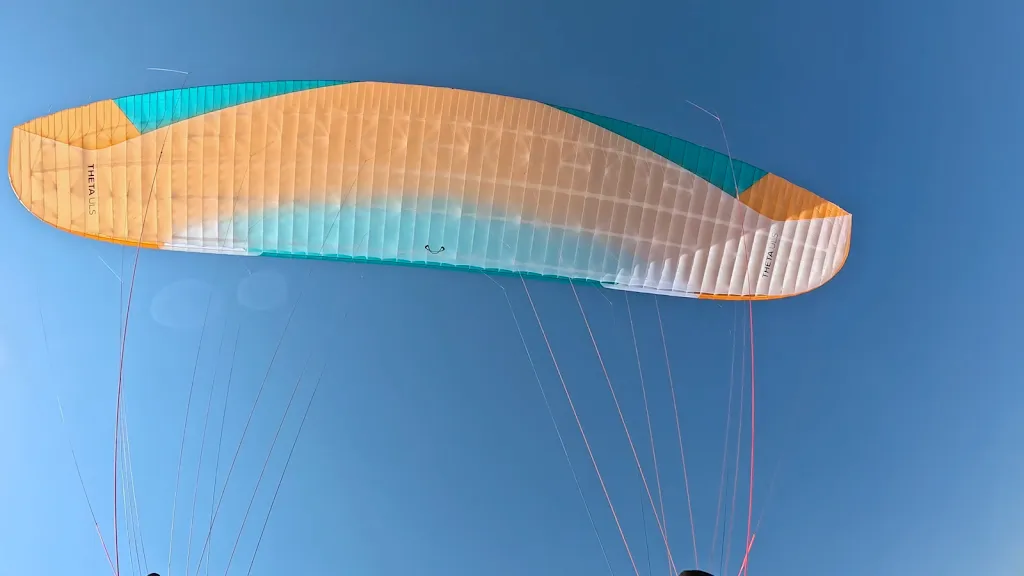
ADVANCE Theta ULS 25: A Light Wing That Glides Like a High-B
The appeal of the Theta ULS is simple. It sheds weight to ease the load, yet its climb and glide reach for the class above. The verdict that it glides like a high-B at 95kg all-up is a clear draw for pilots fresh from A to B. But the place where that glide advantage truly comes alive is at the top of the wing loading. Flown light at the lower end it's easier to handle, but the glide Bassil saw is what the wing shows when it's carrying enough weight. So the Theta ULS isn't a wing to pick from the rating chart alone. Its smooth handling means it sits in the hands even just after stepping up, but pulling the performance out to the end takes a certain amount of flight time and active weight management. Less an easy mid-B than a wing that gives distance back to the pilot who wants to go further on a light frame.
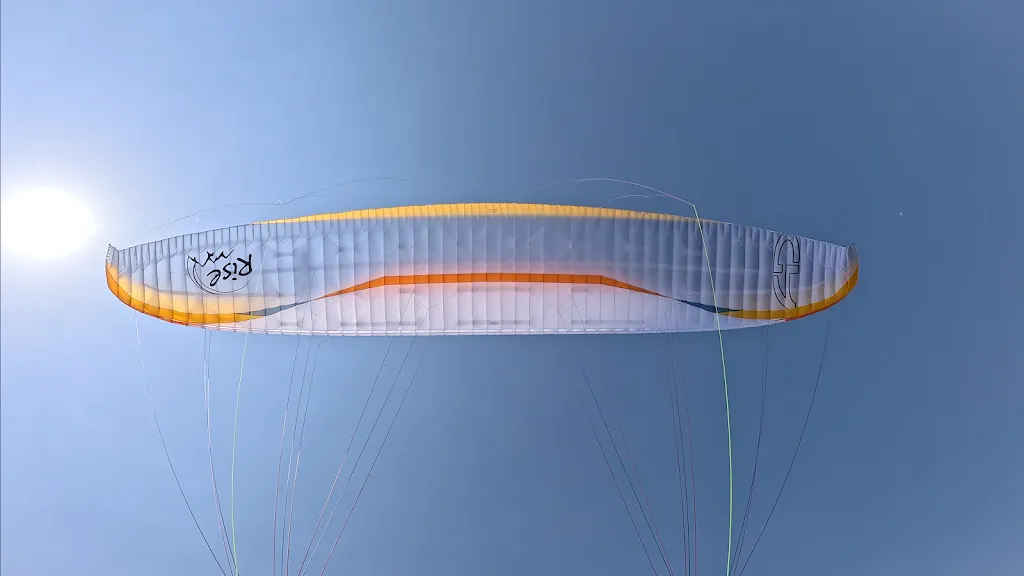
Air Design Rise 5 S — Turning Trim Speed Into a High-B Weapon
The Rise 5's strengths are clear: fast trim speed for a high-B, brakes that bite immediately, and coring efficiency that mimics a higher class, all in one wing. But those strengths don't come for free. The short, direct brakes and the tightly winding turn assume hands that know how to work the wing actively in rough air. This is less a first high-B straight out of school than a wing that rewards the upper-intermediate pilot — exactly as much as their skill — when they want to pull more efficiency out of thermals and glides. So Bassil's "super relaxed" is better read not as unconditional comfort but as the ease that comes back to a pilot who knows how to fly it. For pilots who want fast trim and a sense of calm at the same time, the Rise 5 offers a rare, well-balanced answer.
DaVinci Funky 2 (S): The Unexpected Glide of a 3-Liner, a Polished High-B Package
The appeal of the Funky 2 lies in carrying easy feel and top-tier glide together in one wing. Its hydraulically smooth, tight turn lets it hold a light-wind core, and against the grain of 3-line convention it still glides shoulder to shoulder with the Rush 6. But Bassil attaches one condition again and again: this wing reveals itself near max weight. Without enough wing loading, neither the surfing-the-air sensation he describes nor the top-end glide result comes through fully. So the Funky 2 isn't a difficult glider to fly; it's one that pays back exactly what you load onto it, for the pilot who knows how to put weight into a wing. Rather than floating it lightly on the strength of its easy handling, it suits the high-B pilot who wants to push it to the top of the range and draw the glide out.
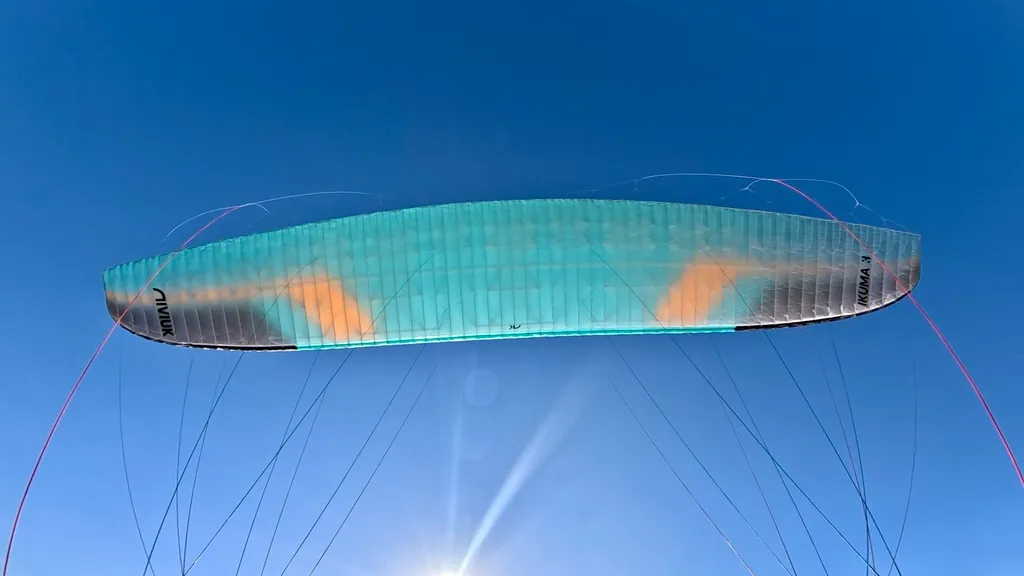
Niviuk Ikuma 3 (24): A High-B XC Wing That Competes on Handling
The Ikuma 3's strengths are clear. The turn locks in instantly on a short brake input, and the way it hovers and holds in weak lift is a real pleasure for pilots who enjoy handling. But that pleasure means something only when there's a hand to read the wing. Where the Swift 6 goes dull at mid weights, the Ikuma 3 stays alive to the end, and that liveliness becomes a burden if you handle it roughly, a reward if you handle it precisely. This isn't a wing that overwhelms you on paper. It's a wing that gives the finesse of your control hand straight back to you as enjoyment. It suits the pilot who finds satisfaction in a single turn better than the one chasing glide numbers.
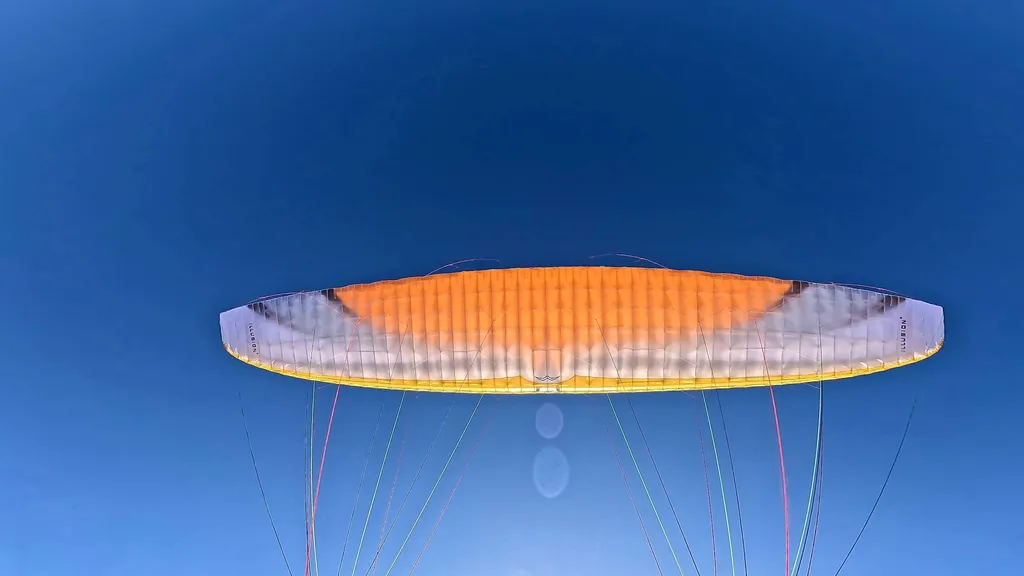
MacPara Illusion 2 (size 24) - The Gentle Temperament of a Stress-Free low-B
The Illusion 2's greatest asset is trust. From nil-wind launch through thermals to full-bar cruising, the wing never startles the pilot, and the glide doesn't sag even when accelerated. For a pilot looking to stack up airtime in the big mountains without tension, that sense of security is a skill in its own right. That gentleness is also a matter of taste, though. Saying the pitch is calmer than the Ion 7 or the Buzz Z7 in the same class means it may feel a touch bland to pilots who relish dynamic feedback in the hands or aggressive coring. The Illusion 2 isn't a wing that shakes you awake — it's one that stays by your side to the end. That's exactly why Bassil thought of a Golden retriever.
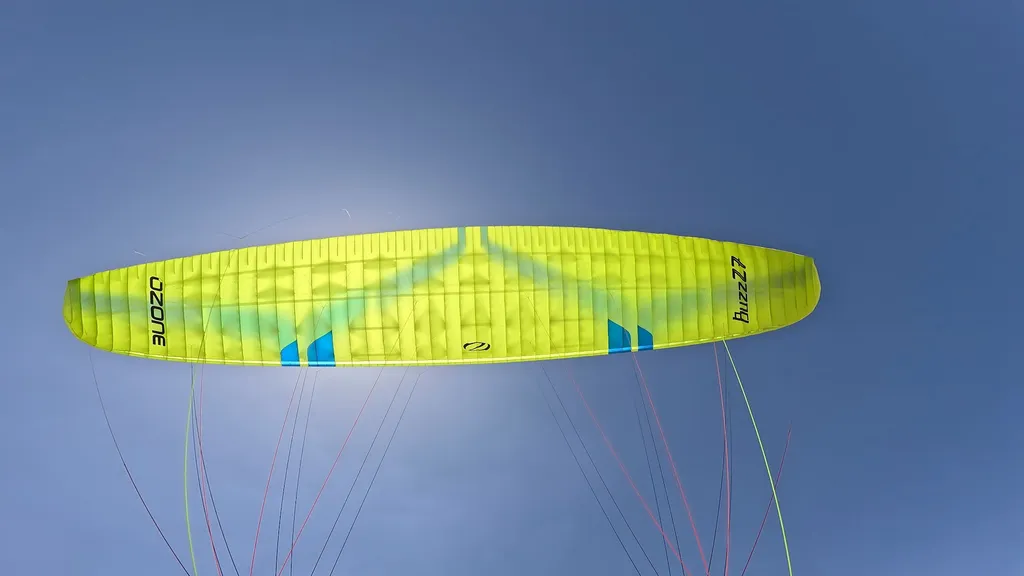
Ozone Buzz Z7 MS — An Easygoing Entry-Level B That Adds Efficiency
The Buzz Z7's strengths are clear. From a nil-wind launch to a glide through rough air, it never tenses the pilot, yet it pairs the climb and the glide efficiency that entry-level wings usually surrender. Big ears are easy to make, and when released they reopen on their own without the pilot lifting a finger. That is also why Bassil kept it next to the Nova Ion 7 for the whole test: it holds onto safe behaviour without conceding any efficiency. So this glider gives the same answer to the pilot just starting out and to the senior pilot who wants less workload but refuses to give up climb and glide. It is a low-B that spares you the choice between comfort and efficiency.
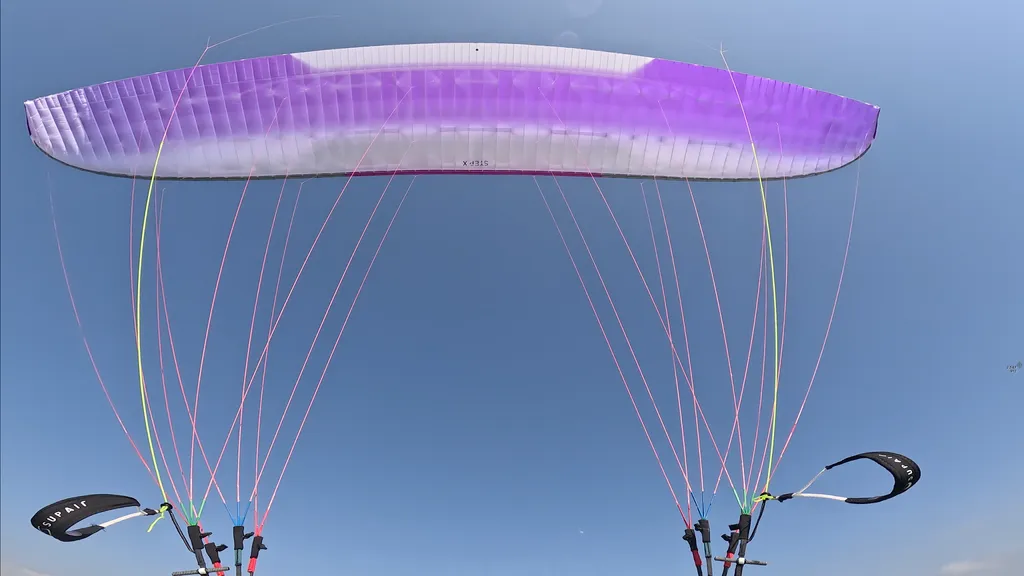
Supair Step X: An Easy Entry, with Top-Tier High-B Glide
The Step X's strength lies in packing two things into one wing: the efficiency to hold its own on glide next to the class above, and the agility to wind up a tight core. The verdict that the tips don't flutter and the brakes respond instantly even in rough conditions tells you this efficiency wasn't carved out of stability. That potential, though, only unlocks with wing loading. At the bottom of the range it flies easily but loses its bite for pushing into the airmass; the more weight you put on, the more solid it gets and the more its penetration comes alive. So the Step X is less an effortlessly easy wing than a high-B that repays you with its glide when you load it enough.
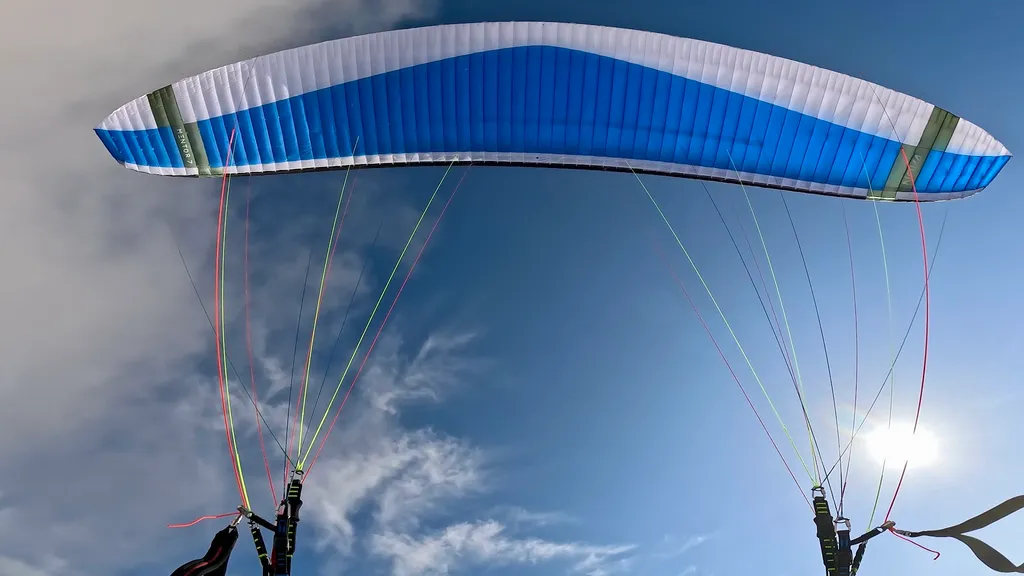
NOVA Mentor 7 S: The Bentley of the Sky, Redefining High-B Comfort
Everything about this wing converges on one question. For a pilot with no intention of competing in the C class, what reason is there to fly anything else? If it damps the jolts of rough air, holds onto weak thermals to the last, and gives nothing away on glide, the question is more than fair. The catch lies in the answer Bassil himself supplies. For a seasoned Mentor 7 pilot to draw level with a 2-liner C pilot in competition, he says, you'd have to sit on the speed bar 35% longer before a draw even comes into view. What this wing closes is not a gap in the equipment but the burden the pilot carries. The Mentor 7 S is less a wing that removes the need to move up to C, and more a wing that makes the choice not to move up something you won't regret. That's why the Bentley nickname fits. Not the fastest car, but the one that carries you the farthest in the greatest comfort.
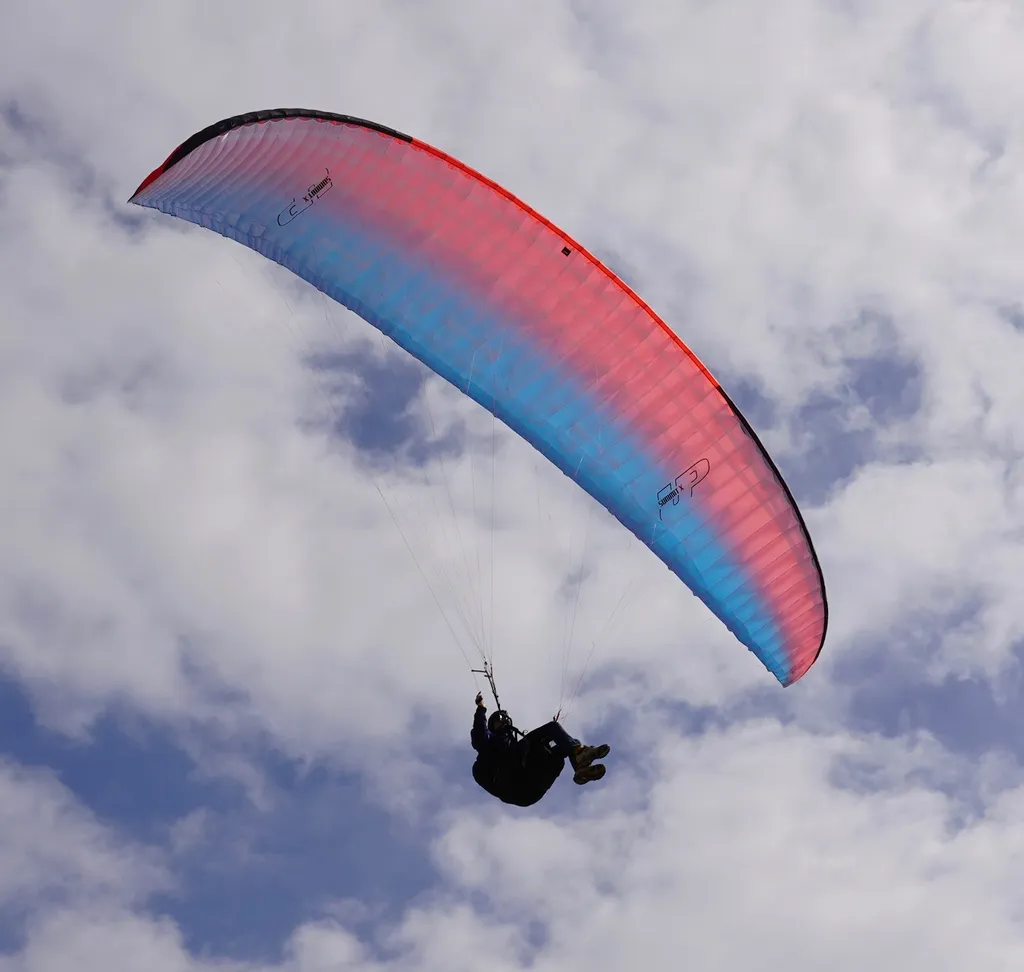
UP Summit X — A Glider That Joins the Super-High-B Elite
The Summit X's strengths are clear. It transplants the brake authority and gliding feel of the C-class Trango-X into a B-class body, making it faster than the Swift 6 and, in rough air, more comfortable than the Maestro 2. But super-high B is not as forgiving a territory as the name might suggest. A wing of 5.87 aspect ratio felt comfortable in Bassil's flying because he flew it actively at its optimal loading — and he himself notes that it asks for more input than the Swift 6. In the end this glider is a choice for the pilot who wants C-class glide while keeping a B-class safety net close at hand, rather than one who expects the easy comfort of the safety grade. Not because it's an easy wing, but because it returns a near-C-class reward to the pilot who knows how to handle the top of the class.
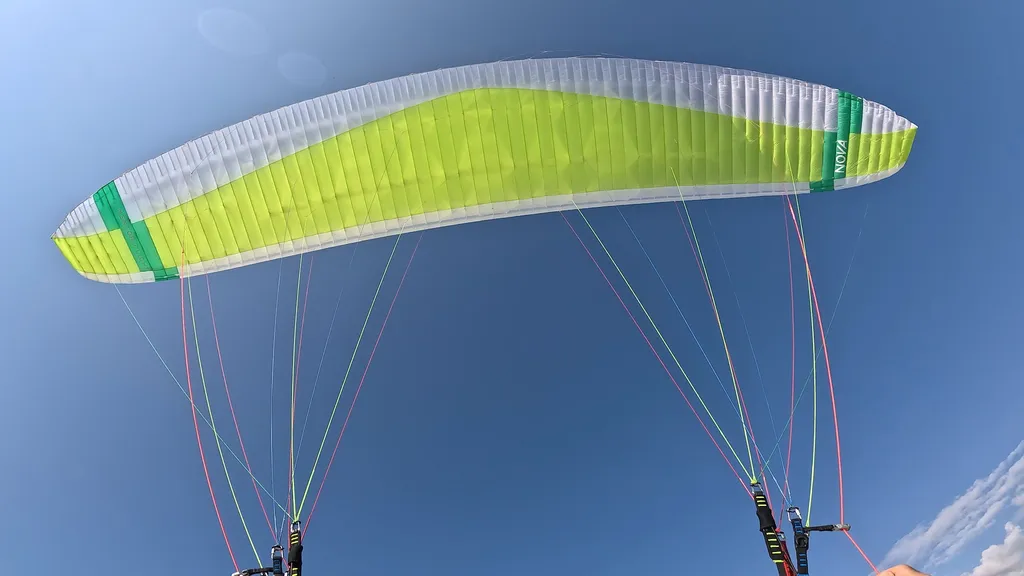
Nova Mentor 7 Light: A High-B as Calm as a Tandem
The virtues of the Mentor 7 Light are plain. It is a high-B that is calmer than some EN-A wings, and a pilot moving up from a low-B feels at home from the first flight. In exchange, that stability erases information along with it in weak thermals. On a day when you have to scratch up faint lift, when you want to read the core through your fingertips, that silence can feel frustrating. So it is not an all-rounder. For a pilot who wants stability on a strong day and a comfortable glide, it is as dependable a partner as they come; but if you chase the feel of digging thermals out by hand, a more talkative wing suits you better. The Mentor 7 Light's bargain is clear: it hands you a step up in performance in return for keeping the pilot reassured.
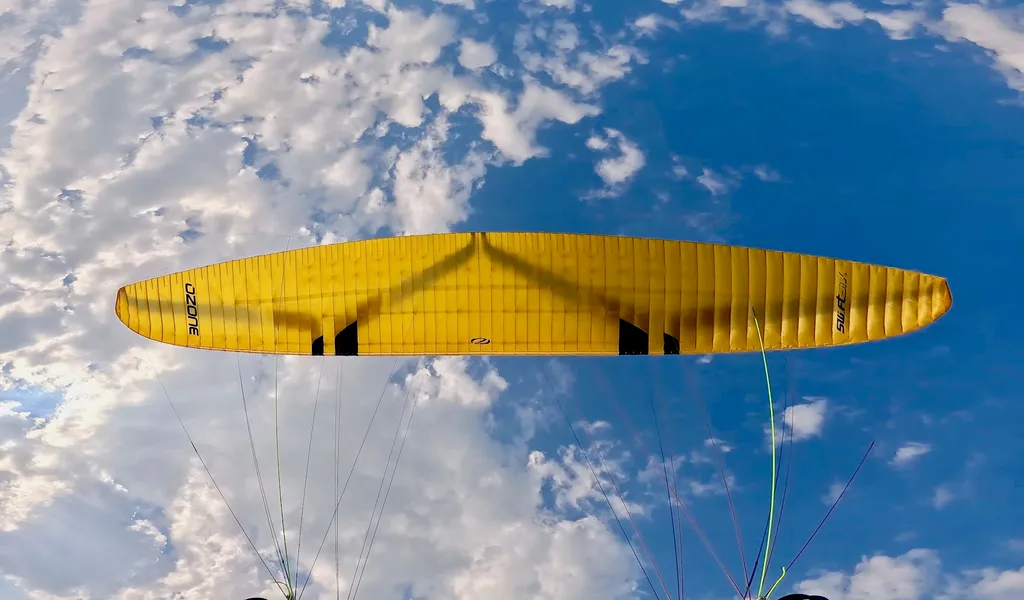
Ozone Swift 6 — Mellower Than the Rush 6, with Glide That Edges Toward C-Class
The Swift 6's strengths are clear. It carries over almost all of the Rush 6's performance while smoothing the behaviour, trimming the weight, and lifting the glide to where it can challenge C-class wings. But it would be a mistake to read this gentleness as an "easy wing." The near-C glide and the responsiveness of the lightweight cloth only pay off for the pilot who knows how to exploit its floaty character in light air and decelerate it precisely in rough air. For a pilot graduating from the entry stage into serious XC, it offers high-end glide without jumping up a class. It is the choice for someone who wants to stretch distance within the safety margin of B-class rather than take on the risks of C-class.
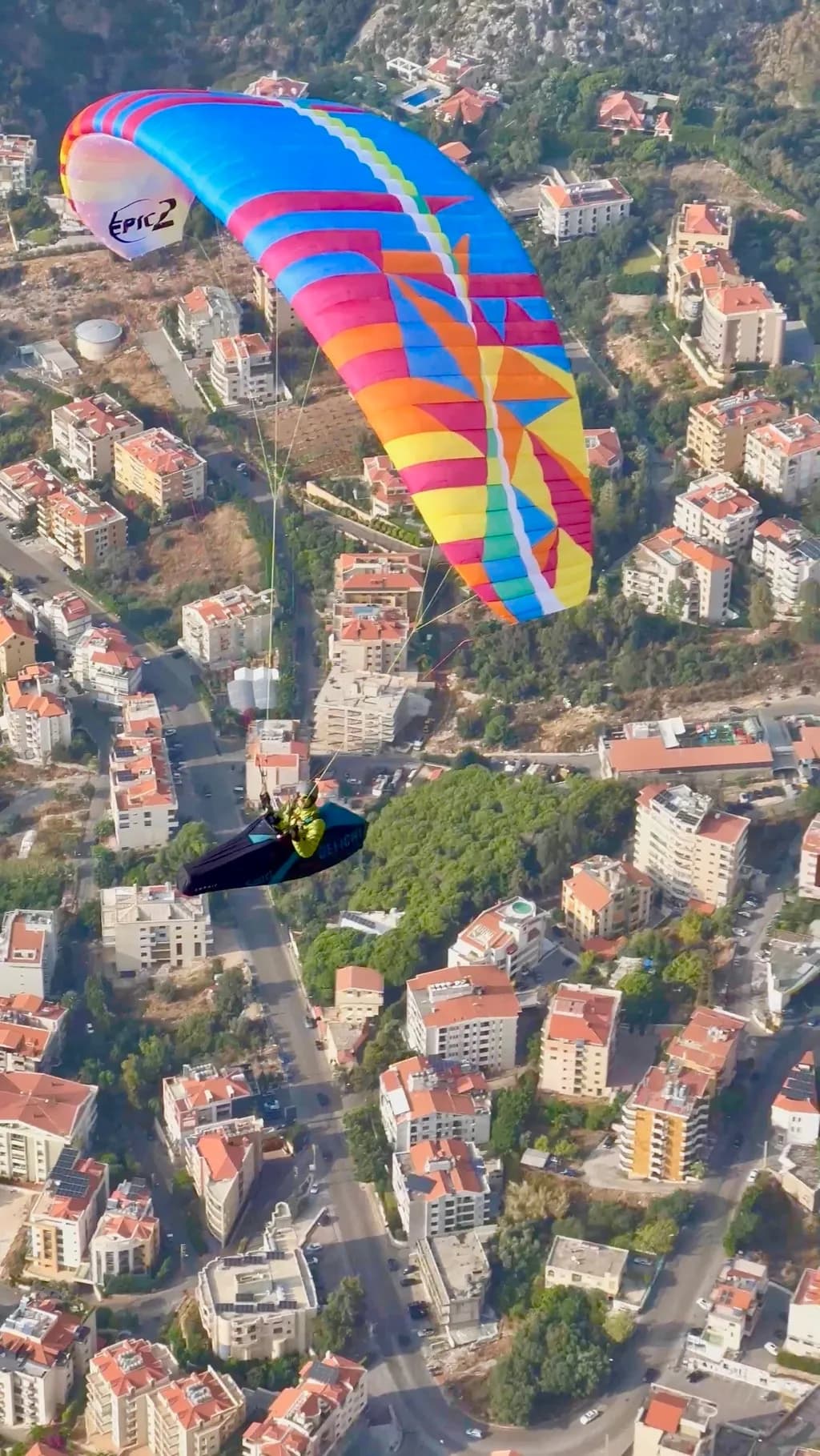
BGD Epic 2 (65-85): The Fastest-Trimming Low B for School Graduates
The Epic 2's strengths are clearly twofold. The long, forgiving brakes and easygoing behaviour put no pressure on a pilot fresh out of school, while at the same time the fast-for-a-low-B trim and the strong floating buoyancy underpin distance flying. What you shouldn't do is read this as a high B substitute. Faster trim than the Rush 6, yes — but Bassil draws a firm line: the glide efficiency itself doesn't match the Base 2 or Rush 6. So the Epic 2's place isn't "a faster entry wing" but a wing that can carry you considerably farther while staying firmly in the entry class. For a pilot who wants to fly farther for the first time without moving up a grade, an option this stress-free is rare.
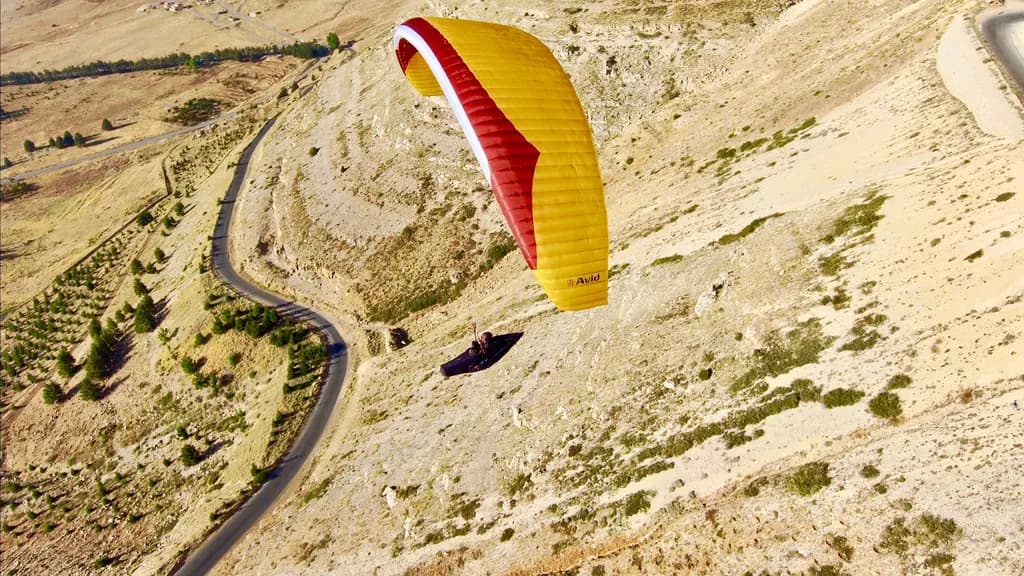
Gin Avid — the Most Forgiving High-B Floater
The Avid's strength is unmistakable. Its weak-wind buoyancy is the best in Gin's B line, and its behaviour is docile in a way that belies its high-aspect-ratio spec. For a pilot choosing the next wing after two seasons on a low-B, it is the option where the workload barely rises while the climb clearly improves. But the other reward that aspect ratio promises — the efficiency of slicing through strong air and digging forward — never fully came alive in Bassil's hands. The note that the glide feels pinned the more you load it points precisely to this wing's boundary. The Avid is less a high-B for attacking distance than a glider for the pilot who wants high-B float with the peace of mind of a mid-B. It fits best the pilot who wants to step up one notch without strain, before moving on to a Carrera.
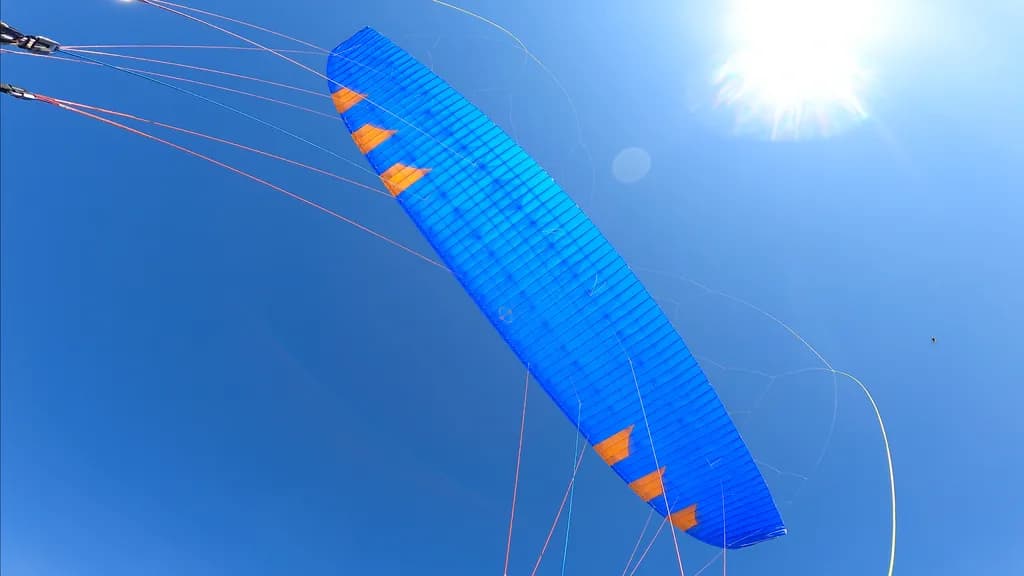
PHI Maestro 2 (21): The "Toruk Makto" of the high-B Class
The Maestro 2's strengths are clear. It competes in the same class as the Rush 6 and Chili 5, yet it doesn't haul that performance along heavily — it delivers it through a crisp, articulate brake. But this feel doesn't come for free. The clear feedback across that 30cm of travel, the precision to aim at a core inside turbulence — they open up fully only to the pilot who can read those signals and answer them. So this isn't simply an easy high-B; it's a glider that returns the most pleasure to a hand already fluent in the high-B class. There's meaning in Bassil calling it the "toruk makto" he has tamed. It isn't a relationship of submission, but one of mutual reading and response.
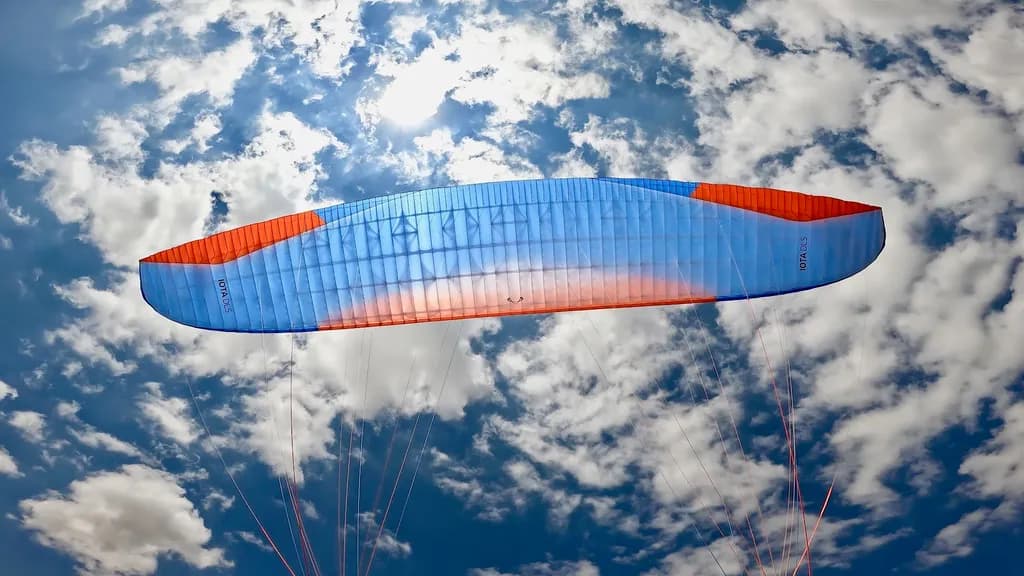
Advance Iota DLS — The Most Polished High-B Advance Has Built
The Iota DLS's strengths are unambiguous. Climb equals the Freedom 2, glide at full bar matches a reference B, and pitch is steadier than the Rush 6 or the Freedom 2. The brakes are short and precise, carving tight into the heart of a thermal. It bundles everything a high-B can reach without ever feeling demanding. But there's a condition attached. As Bassil himself notes, this wing only truly comes alive above 70% of the weight range, and strong-wind launches call for a brake input. This is not a light-and-easy entry wing — it rewards pilots who carry enough wing loading and know how to handle strong air, paying them back with top-tier glide.
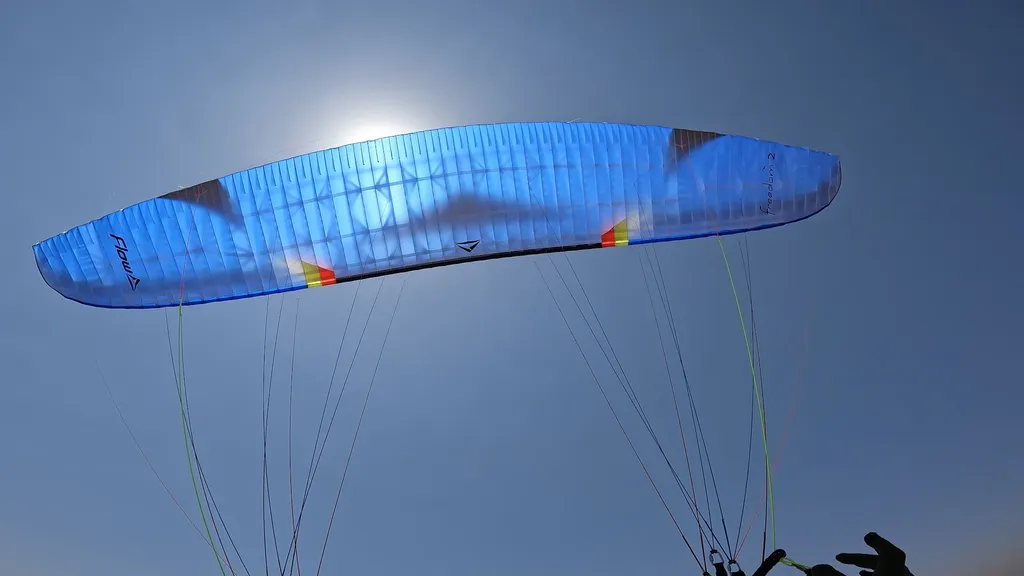
Flow Freedom 2 (S): A High-B That Handles Like a C
The Freedom 2's strengths are its linear brakes and its handling in rough thermals. It latches onto a core precisely and answers every input with clear feedback. Its glide sits in the same territory as the Rush 6 and Chili 5, placing it firmly among the top high-B contenders. That sharp feedback, though, cuts both ways. Reacting instantly to input also means it sends rough air straight up to your fingertips, unfiltered. For a pilot who has cleared high-B certification and knows how to read that information, the Freedom 2 is reward enough; for a pilot who has only just stepped up to the class, it demands a corresponding level of focus. Less an easy wing than one that gives a thermal-reading hand back exactly as much as it reads.
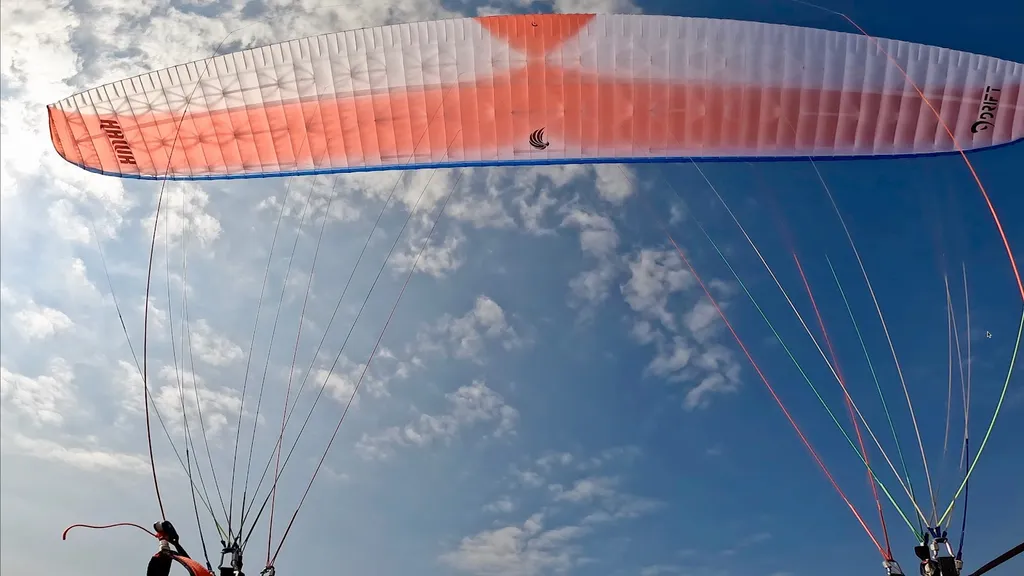
DRIFT Hawk S — Class-Leading Glide, a Talkative High-B Under Your Fingers
The Hawk's achievement is clear. An unheralded newcomer, with its first high-B, squeezes in among the Base 2 light, Rush 6 and Mentor 6, pairing class-leading glide with handling that winds all the way into a tight core. A debut wing that stands shoulder to shoulder with the best in its class right away doesn't come along often. But expect the most comfortable high-B and you'll be caught out. Because it gives up a little more roll and yaw than the Rush 6 in rough air, it suits flying where you read the air through your fingertips and answer it, rather than flying hands-off and letting go. The Hawk isn't a wing that lets the pilot rest — it keeps them awake. The more actively you fly it, the more fully it returns the reward of that class-leading glide.
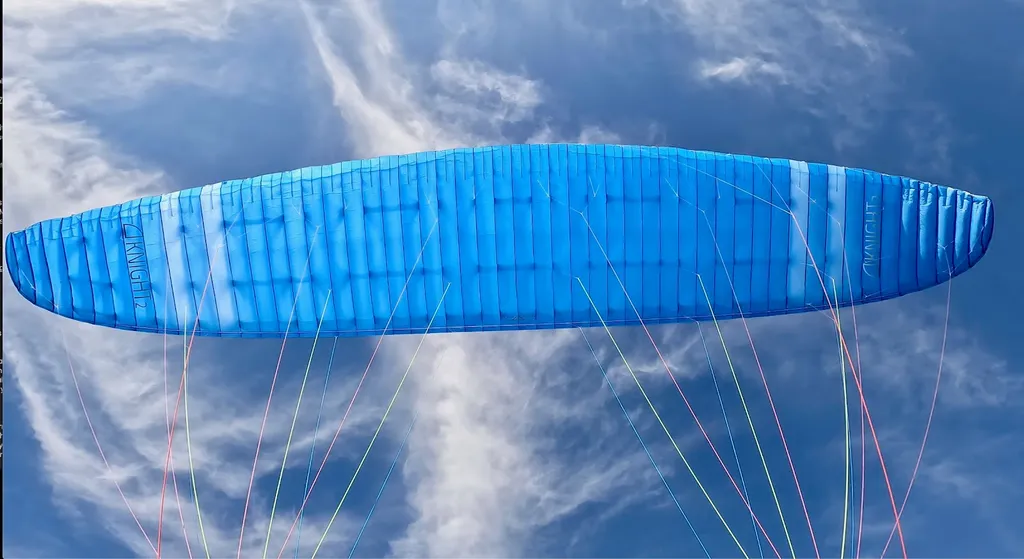
Triple Seven Knight 2 (MS) — A Mid-B That Leads With the Joy of Steering
The Knight 2's strengths are clear-cut. Agility that answers straight to the fingertips, a climb that hangs on through powerless lift, a glide that snaps close to a class up on the lightest bar input — a combination hard to fit into a single mid-B. But it isn't the fastest mid-B. The launch runs a beat behind, and pushed to full speed it yields glide to the higher class. If you're after an XC machine that wins on numbers, the answer is another name. But for a pilot choosing the next wing in the low-to-mid B range who refuses to trade away the sheer pleasure of flying, a mid-B as generous at the fingertips as the Knight 2 is rare indeed.
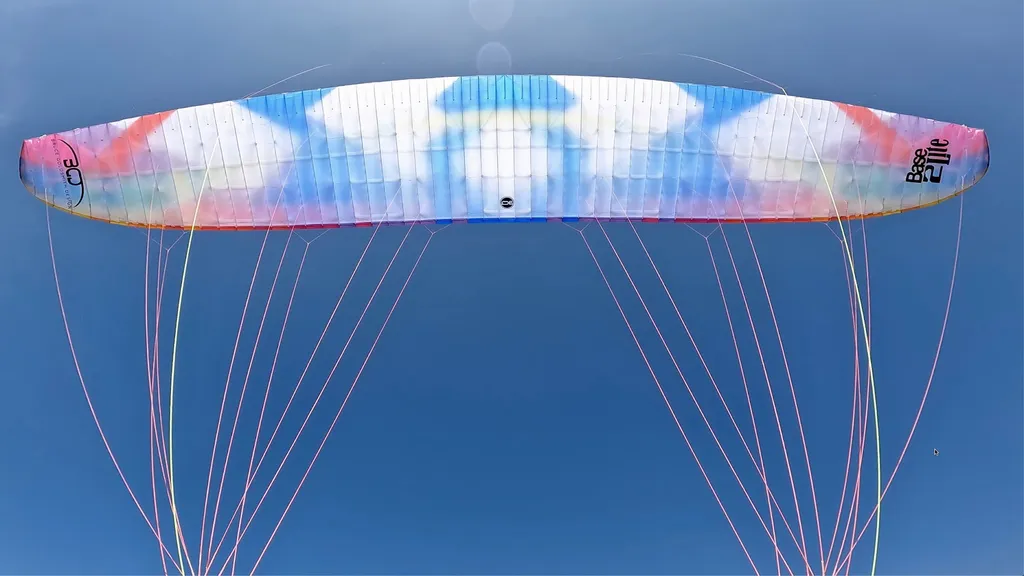
BGD Base 2 Light (S) — The Most Comfortable High-B to Fly
The Base 2 Light's strengths are plain. It launches comfortably, digs into the core with short, precise brakes, and puts the pilot on edge less than a Rush 6 or Rook 3. It's a wing that lets you enjoy high-B performance without having to wrestle with it. That doesn't make it an easy wing. "Comfortable" is always within the bounds of high-B, and a construction stripped of lines comes alive that much more in rough air. If you want the fastest high-B, other wings come to mind first. But for a pilot who wants to meet this class as a pleasure rather than a contest, few wings take off this much of the load.
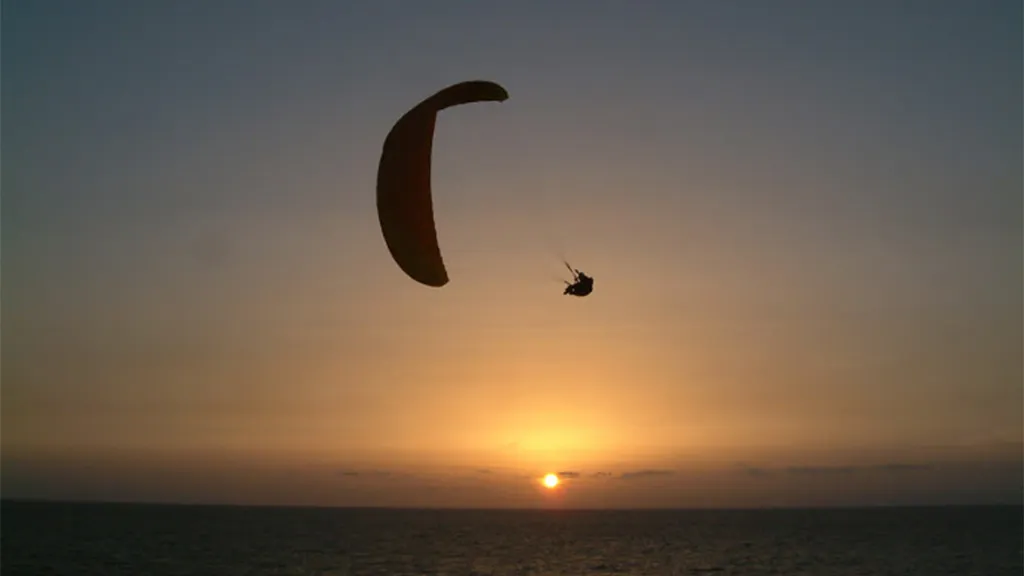
Swing Arcus 2 RS: A Low-B With the Composure of a Meditating Monk
The Arcus 2 RS has clear strengths: high passive safety, a forgiving brake that never hits back even when pulled deep, and a composure that holds steady through turbulence. Whatever conditions you throw at it, it takes them like a monk. That composure comes at a price. Calmer than the competition also means it passes less of the air's movement back to the pilot. For someone who wants active feedback to read a thermal, it can feel a touch muted. But the rougher the air turns, the more that muteness becomes steadiness. For the beginner picking a first EN-B, and for the pilot trying to lower their heart rate in alpine turbulence, that flatness isn't a weakness — it's exactly the reason to choose this wing.
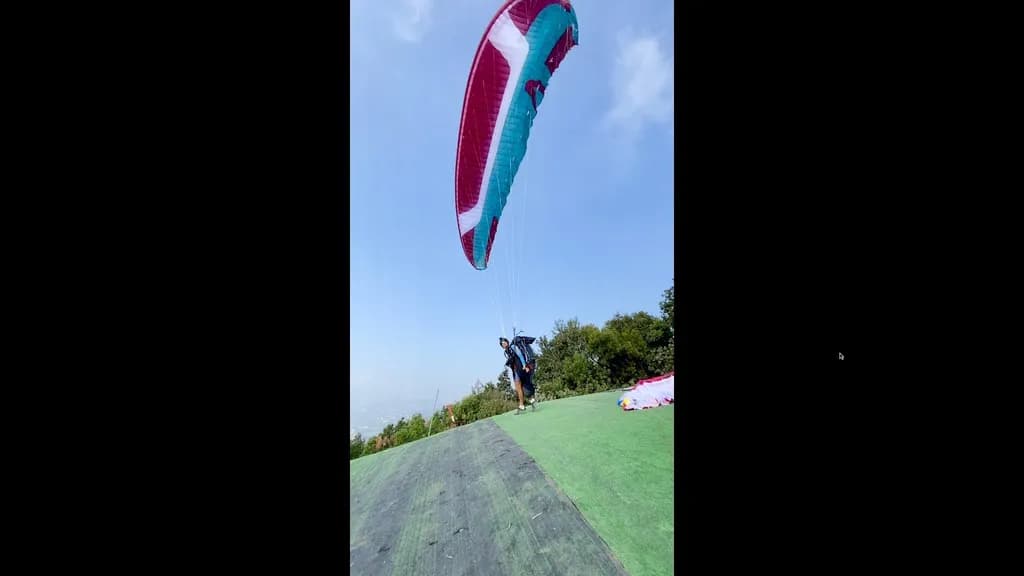
Skywalk Chili 5 — A High-B XC Machine With Mid-B Comfort
The Chili 5's strengths are clear. It has all the climb, glide and top speed of a high-B, yet asks the pilot for active handling at only a mid-B level. The couch-like comfort isn't a marketing line but comes from real behaviour — riding the lift on its own in a thermal without a hand on the brakes. Turning that comfort into distance, though, comes with conditions. If you want efficiency you have to fly toward the top of the weight range, and you'll have to accept the stiffness of the second bar segment. Comfort is given at no cost, but glide and distance are the payoff that only comes when you load the canopy fully and work it as an XC tool. So the Chili 5 is less a wing that made high-B easy than a wing that carries a distance-hungry pilot through a full day without wearing them out.
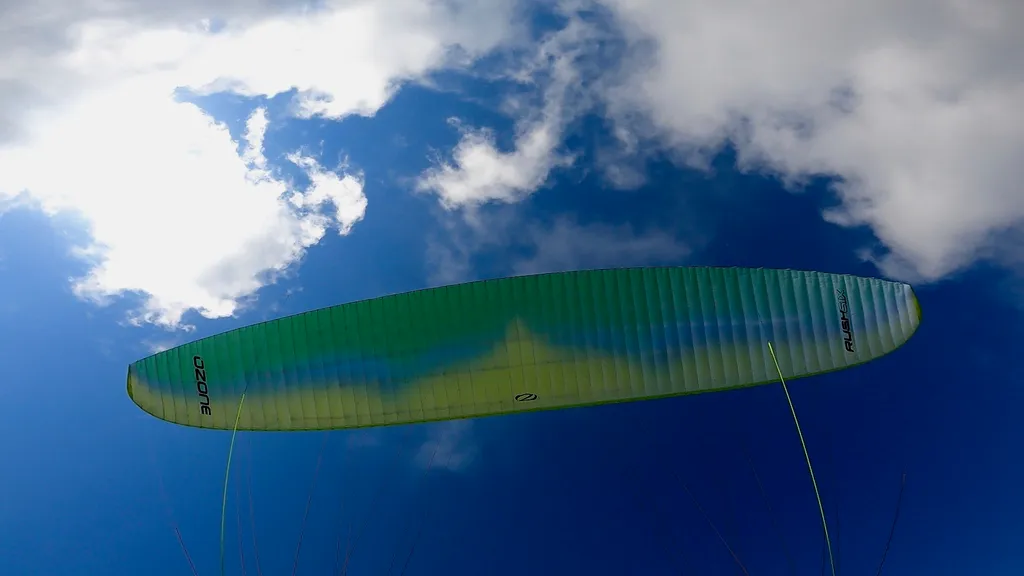
Ozone Rush 6: A High-B That Edges Toward C the Harder You Push the Bar
The Rush 6's offer is clear. It keeps the certification and comfort of a high-B intact, then borrows the forward efficiency of a class above the moment you press the bar. A pilot stepping up from the Rush 5 will feel the sharper turn and the tighter glide from the very first flight. But this performance comes with a condition. The Rush 6 only fully repays the pilot who presses the bar often and holds it long. If your style is to sit at trim and fly at ease, the reasons to pick this wing thin out. For the pilot confident to read the air on the bar and drag a line across it, and for the pilot chasing XC distance within a B-class certification, the Rush 6 is exactly the right answer. Not an easy high-B, but one that gives back as much as you put in.
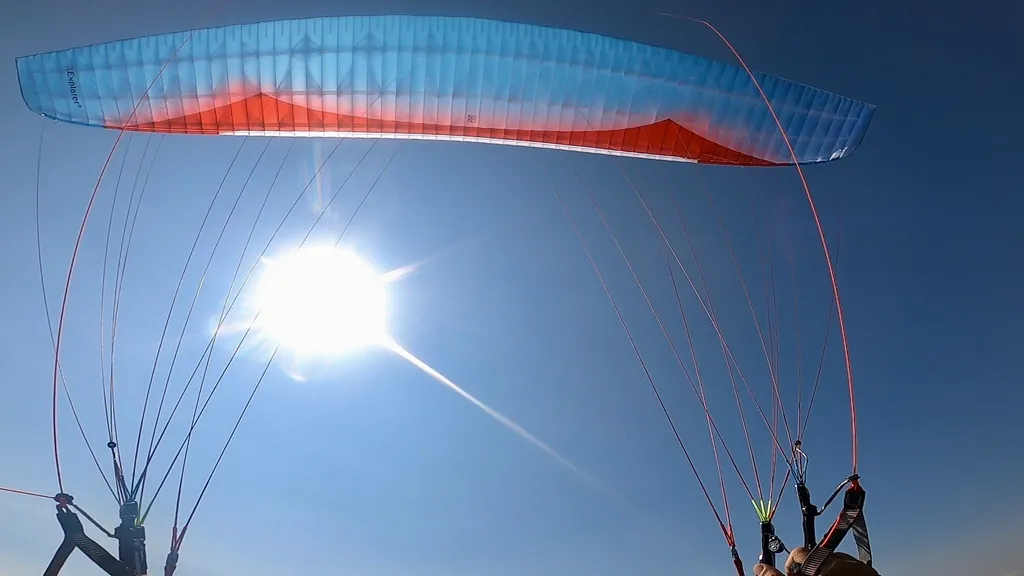
Gin Explorer 2: A High-B That Competes on Glide, Not Speed
The Explorer 2's strengths are clear-cut: it delivers climb and glide close to the class above without the tension a performance-oriented high-B usually demands. It handles more easily than the Rook 3 and feels remarkably smooth in the air. There is one condition attached to that performance, though. As Bassil advises, you need to load it near the top of the weight range for the float and glide to do their job, and top speed stays at 12 km/h over trim — this isn't a wing that gets ahead by going fast. So what the Explorer 2 does well isn't going fast; it's staying up. Even stepping back from the speed contest, it's a fitting choice for the high-B pilot who wants to stay airborne to the end and fill in distance on glide.
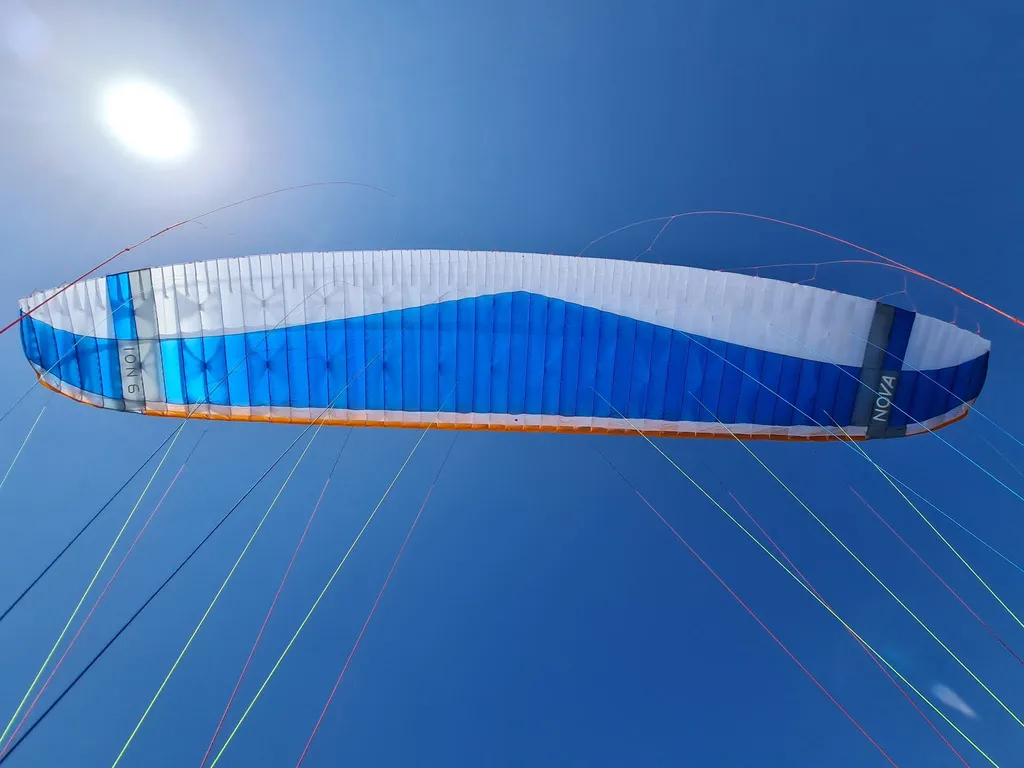
NOVA Ion 6 XS: The Low-B That Never Tires You, So You Fly Further
The Ion 6's strengths are plain. Low workload and thick passive safety let a pilot stay in the air for a long time without tensing up, with energy left to spare at landing. But read that comfort as slackness and you misjudge the wing. The glide is seriously aimed at XC, and the 11 km/h margin above trim together with a precise brake become real tools for a pilot ready to earn distance. The Ion 6 isn't a good wing because it's easy — it's a good wing because it doesn't tire you, and so it takes you further.
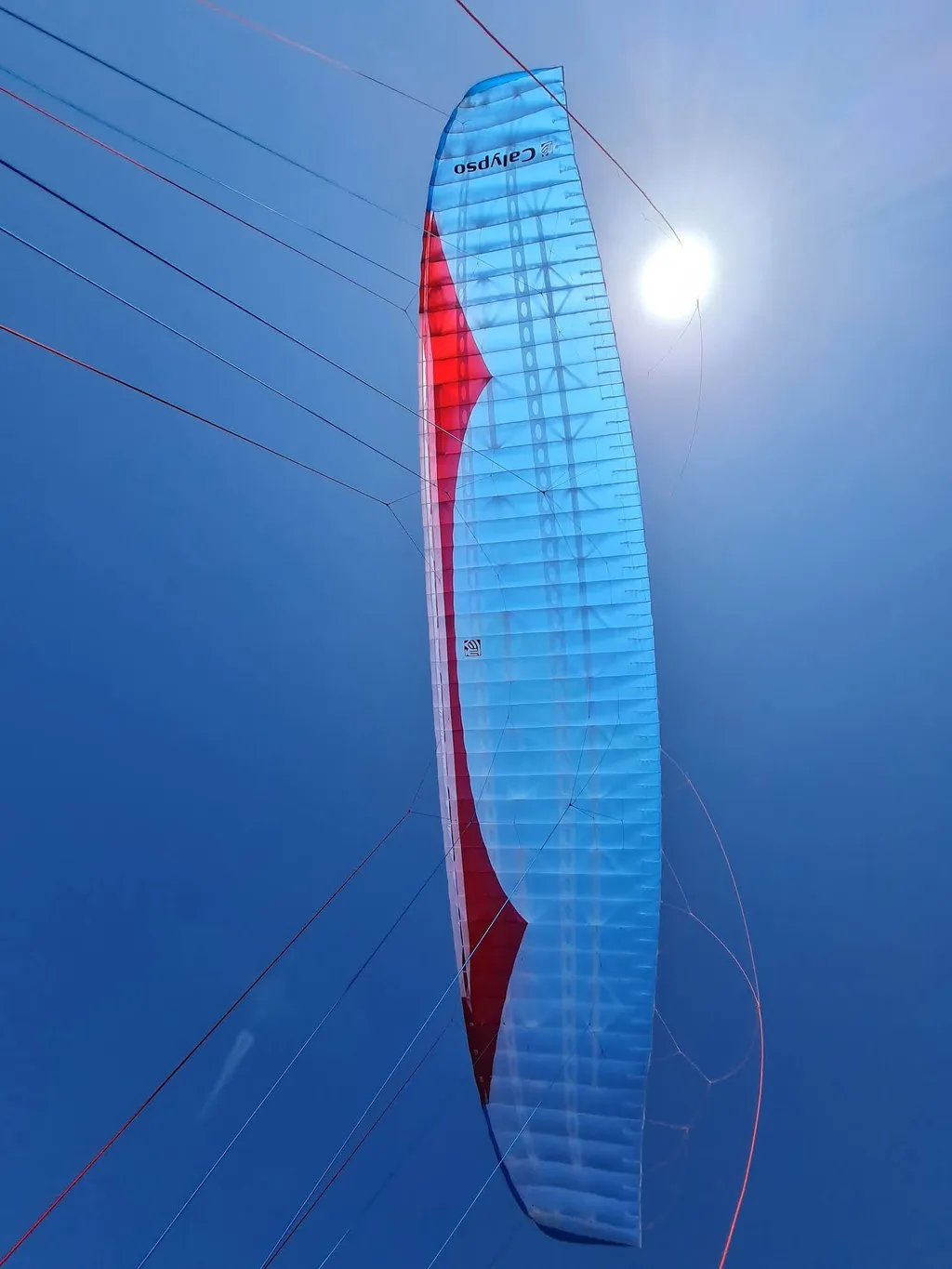
Gin Calypso S — a Light Low-B Built to Enjoy Every Second
The Calypso's strengths are clear. It launches easily, handles lightly, and leaves the pilot at ease inside a thermal. Its large passive safety suits both the person still learning and the person who just wants to enjoy the sky without stress. That comfort has a direction to it. The Calypso never set out to punch through headwind and rough air, and so on a rough day it can't dig forward the way a high-B does. But on a good day, for a pilot who knows how to fly it, it grants a long XC readily enough. It is not a wing you remember for leading on performance — it is a wing that lets you enjoy every second of the flight, and leaves the door to XC open at the end of that enjoyment.
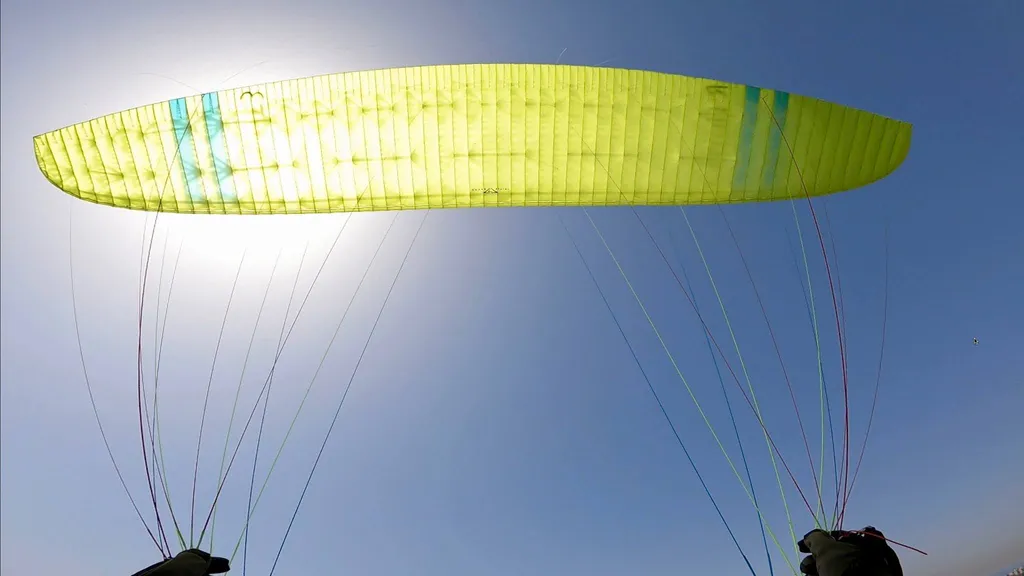
Triple Seven R-Light (S) — Best-in-Class B Climb and Glide, at a Lighter Load
The R-Light's strengths are clear. In climb it rises alongside champion B's like the Swift 5 and Base 2 at a lighter load, and in glide it chases the C-threshold Delta 4 hard on speed. Being lightweight, it packs small and fits well into a hike-and-fly kit or a travel pack. But this performance isn't equally open to everyone. The R-Light hands you the air's information through the risers before the brakes, and the short, linear brakes assume a pilot who can read that signal and answer it in time. The patience the light cloth demands on a nil-wind launch is cut from the same cloth. To the pilot who listens through the risers and answers through the brakes, the R-Light gives back exactly that much climb and glide.
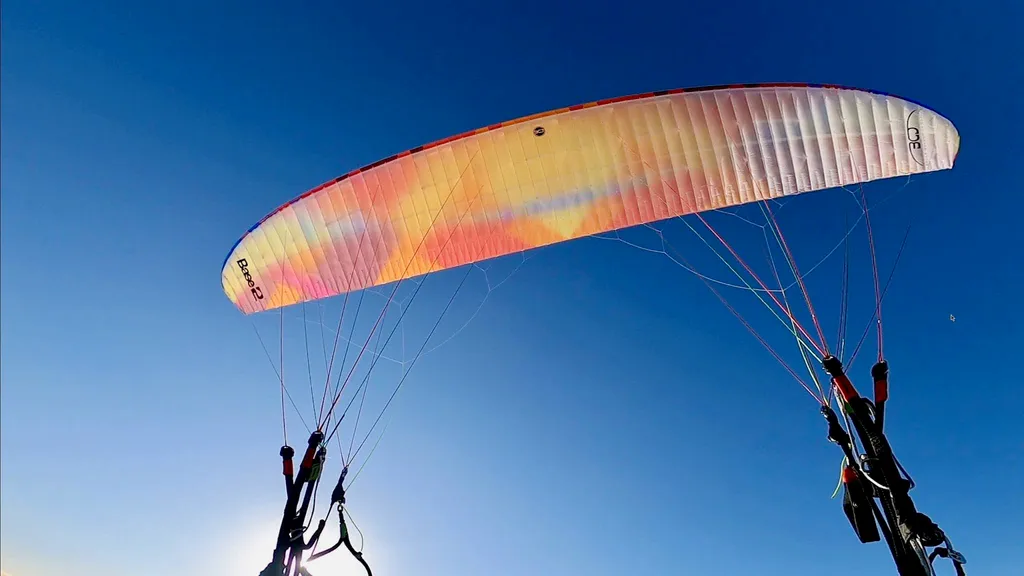
BGD Base 2 (M·S): A Relaxed High B That Glides Like the Rook 3
The Base 2's strength is sharply drawn. It holds a very calm feel all the way through, yet in glide it stands on the same line as the class-leading Rook 3. Not trading comfort away for performance is what gives this wing its worth. That performance does come with a condition. To draw out its full efficiency you'll want to load it near maximum all-up weight. A seasoned pilot after sharper behaviour will look elsewhere, but that minority isn't who the Base 2 is aimed at. Bassil reckons around 90% of high-B pilots will be happy on this wing — it's built for exactly that majority who want a single card that's easy to handle yet gives nothing away on performance.
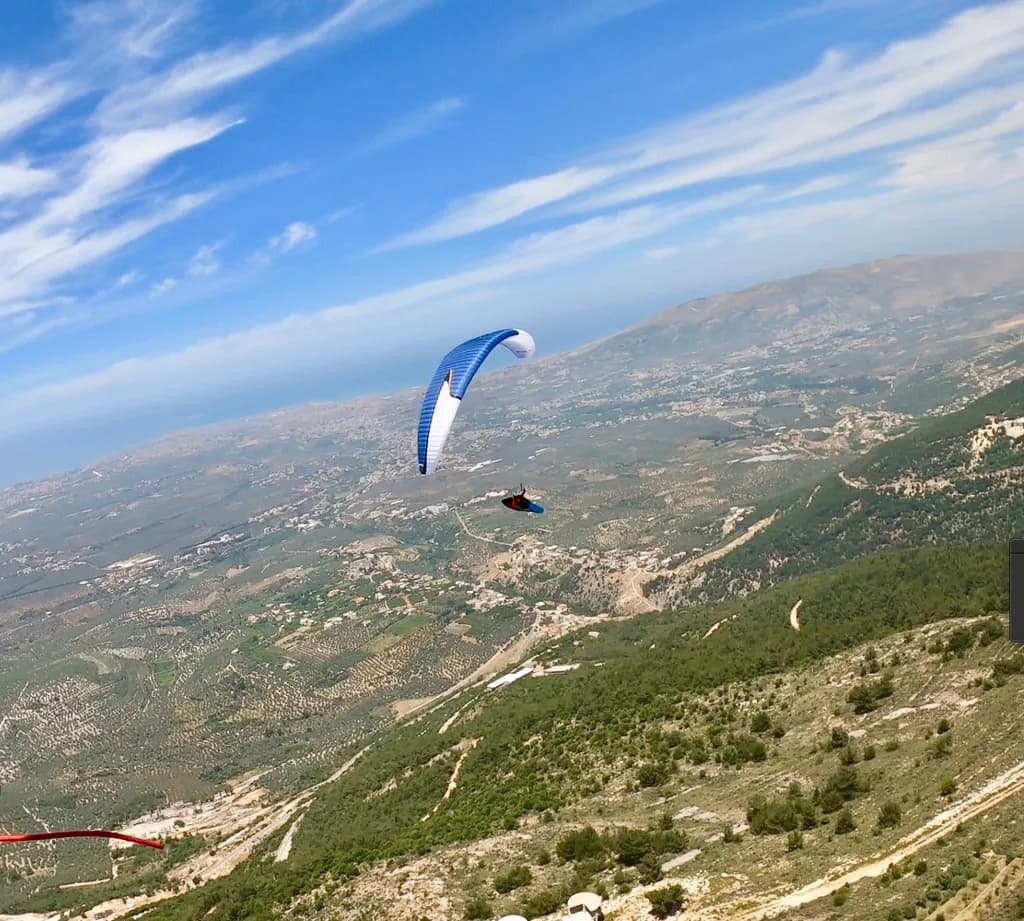
Niviuk Ikuma 2 (24): An Accessible High-B With Top-Tier Glide
The Ikuma 2's strengths are clear. The launch could hardly be smoother, and the short, definite brake cores a narrow thermal at once. The glide sits beside the five best high-B wings, and because the pressure never runs heavy, there's still strength in the arms after a long flight. It's a wing that hands you top-tier performance without the matching burden. There is one condition attached. When the air breaks up and the valley breeze pushes in, a slight pitch back delays the core entry, and in that moment the wing asks for the pilot's active input. So the Ikuma 2 isn't a wing that flies rough days for you. For most of the time it gives comfort and glide freely, and only in the genuinely nasty moments does it ask to borrow the controlling hand for a beat.
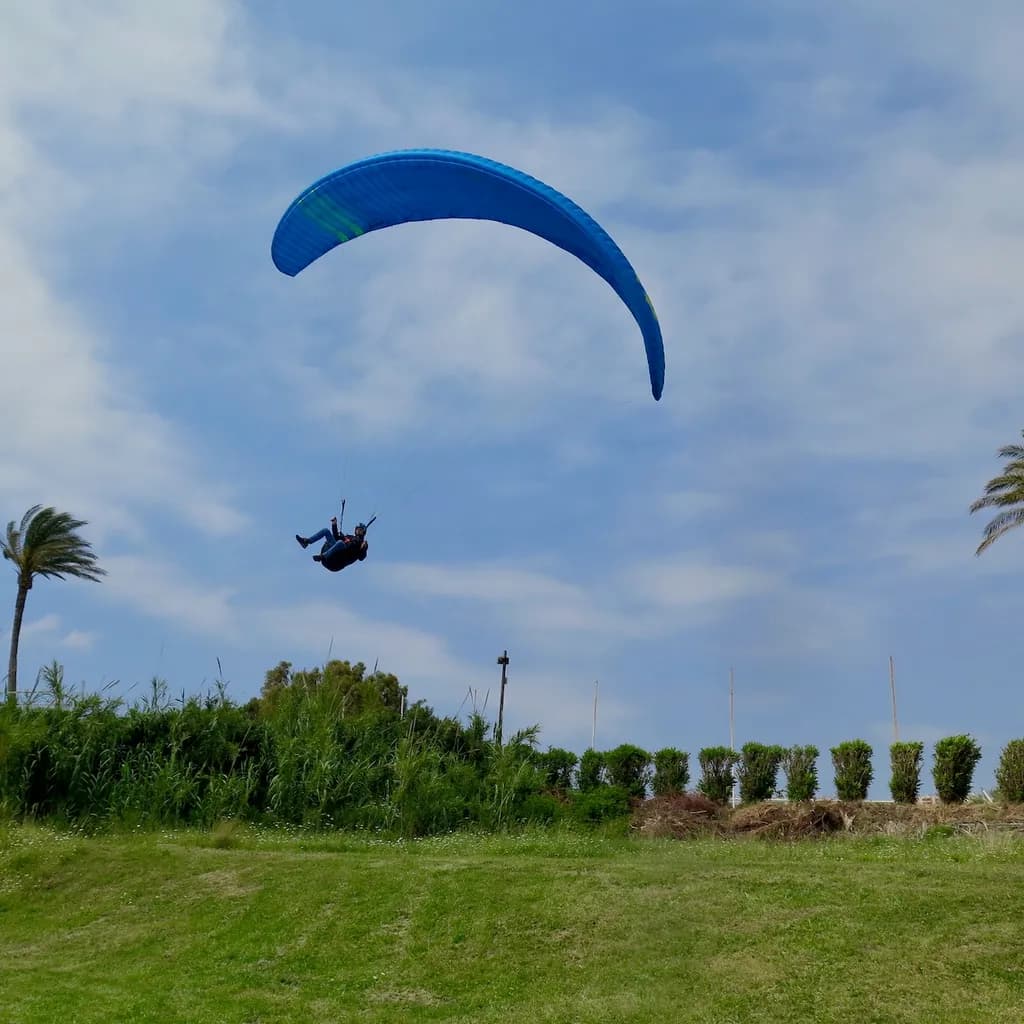
Triple Seven Rook 3 MS — A High-End EN-B Reaching Into the Class Above
Bassil rates the Rook 3 as the best high-end EN-B he has tested. As his verdict that it stood shoulder to shoulder with the EN-D M7 in climb makes clear, this is a wing with an unusually high performance ceiling. But there is a condition. Do not fly it at the bottom of the weight range, he draws that line clearly. Loaded light, the climb and glide this wing can produce stay half asleep. The Rook 3 is not an easy EN-B; it is a high-B that returns near-D performance to the pilot who fills it past the midpoint and flies it actively.
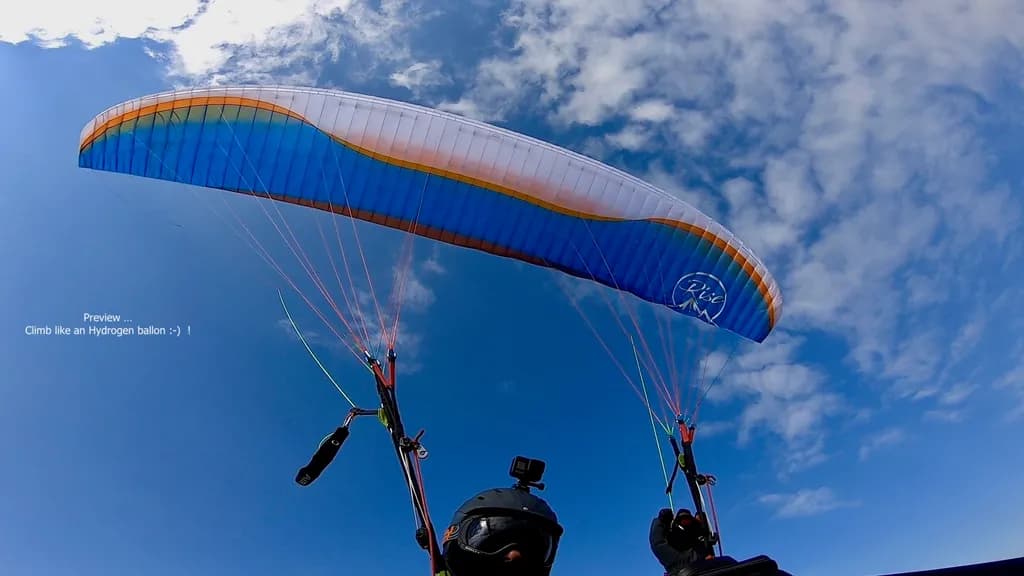
AD Rise 4 (S) — A High-B That Pairs Comfort With Top-End Glide
The Rise 4's strengths are unambiguous. It is easier to handle than the Rise 3, its comfort rivals the Eden 7, and its glide holds its own against the very best in the class. For the pilot who wants performance without fighting the wing at every turn, this combination is rare. The caveats are just as clear. In smooth air it floats up without losing the thermal, but add wind and the climb loses its polish, and the pitch as it drives into a headwind is a touch underwhelming. Bassil notes this too, adding that other sizes may behave differently. So the Rise 4 is less a wing for punching straight through rough headwind than a high-B that hands back comfort and glide together inside calm thermals.
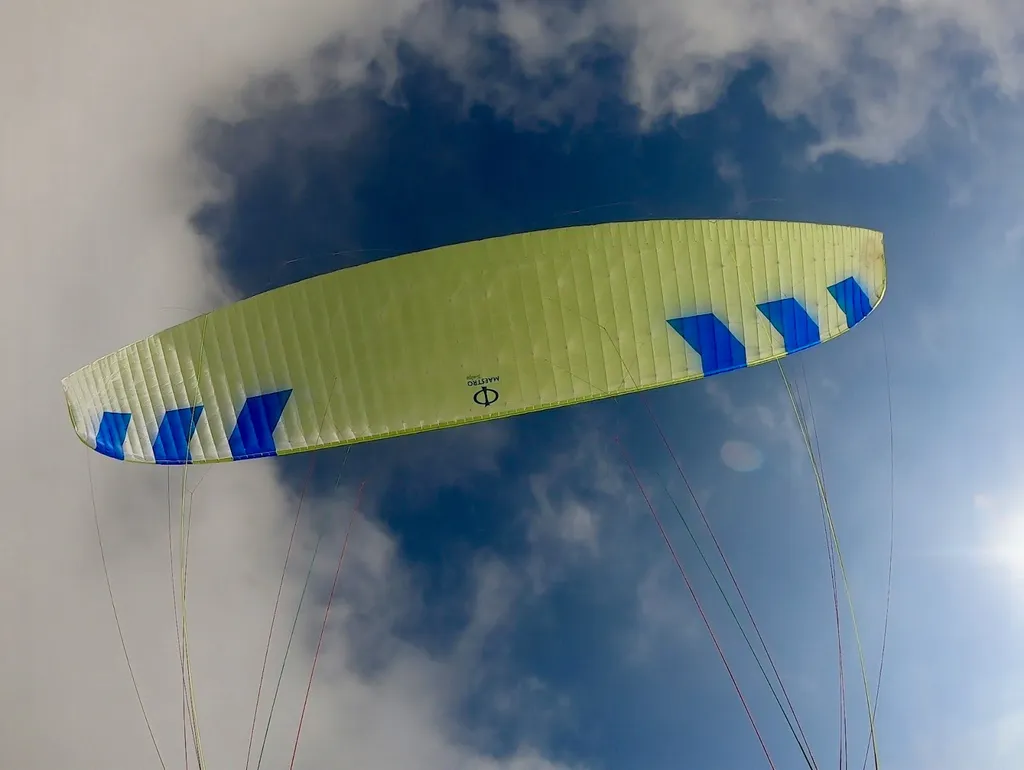
PHI Maestro X-Alps 19 — A Light B+ That Bites the Core Only When You Fly It Actively
On paper alone it's a tempting mix. The launch is easy thanks to the light cloth, the turn is agile, the glide sits at the top of the B class, and the top speed lives to the very end. What's actually valuable in this review, though, is the prescription for handling rough air. When strong wind or a punchy valley breeze rolls in, the 19 shakes in every direction, and the answer isn't to pull your hands off but to actively push bar and hold the core with the brakes. One more thing. Bassil clearly notes that even the same wing flies very differently as a 19 versus a 21, and he places more trust in the standard 21. So the X-Alps 19 isn't a wing that becomes easy on its own just because it's light. Only a B+ pilot who knows how to drive it in rough air will draw the full potential out of this light XC.
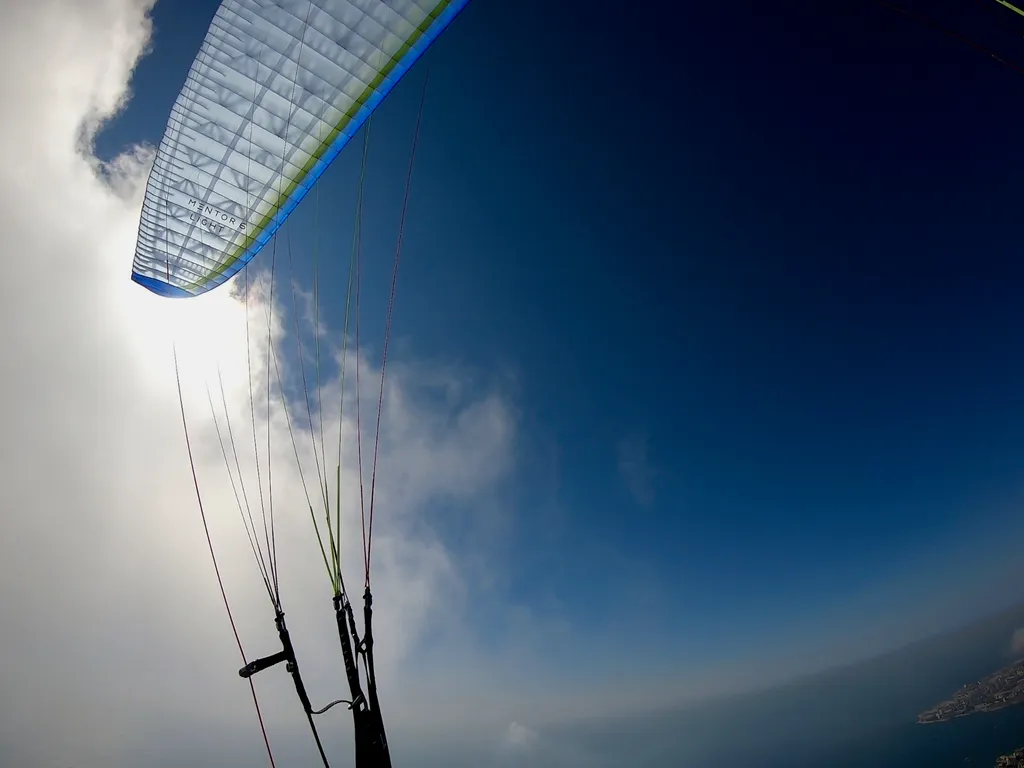
Nova Mentor 6 Light XS — Lighter Body, Sharper Handling
What makes the Mentor 6 Light impressive is that the weight it shed didn't cut into performance but came back as sharpness at your fingertips. The brakes got lighter and the turn got keener, while the climb and glide inherited the top-of-class standing the standard version held. It packs comfort and agility into a single wing. Just don't read the comfort here as laziness. The lighter canopy comes more alive in rough air, and the place Bassil assigns this wing is long, demanding XC. This isn't the comfort of gently carrying a beginner — it's the comfort that only becomes an asset when a pilot who handles a high-B well pushes far. The door the lost weight opens leads, in the end, toward a longer day and a greater distance.
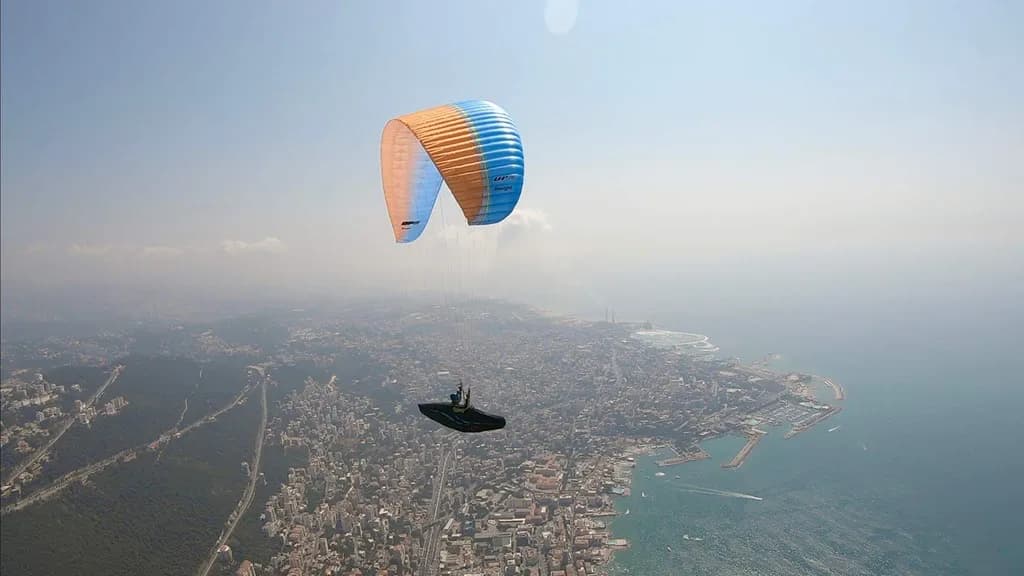
UP Kangri M — The Feel of a C, Wrapped in a B
The Kangri's proposition is clear: it packs C-like feel and top-tier B glide into a single B certification. But the combination comes with conditions. In the weakest thermals it climbs beside the Bonanza 2 rather than ahead of it, and the C-like feel presumes an equally active pilot — this is not a hands-off B you can simply lean back and trust. That makes the Kangri's place unmistakable. It's the wing for the pilot who hasn't crossed into C yet but wants to draw on that feel early, without giving up the margin a B still provides.
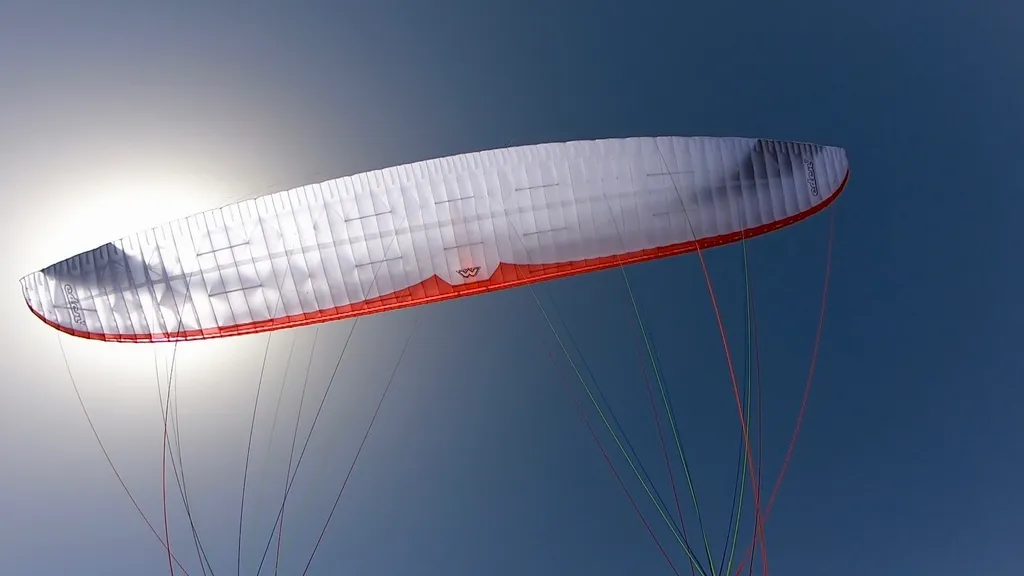
MacPara Eden 7 (24) — A High-B That Lowers the Entry Bar and Wins on Top Speed
The strengths are quickly listed: immediate turn initiation out of short brake travel, glide on par with the best B's, and a top-speed edge stacked on top of it. But "easy" is a word spoken strictly inside the high-B frame. The aspect ratio is 6, and the feedback doesn't arrive loudly — it arrives quietly, at the fingertips. A canopy that says little is not easy for a beginner; it is easy for a pilot who can read small signals. So this is not a first EN-B for someone who has just stepped into the class. It is for the pilot whose hands are already at home on a B, who wants more performance without moving up to C. And if you're still weighing it against the Mentor 6, the answer comes down to one question: how often do you push the bar?
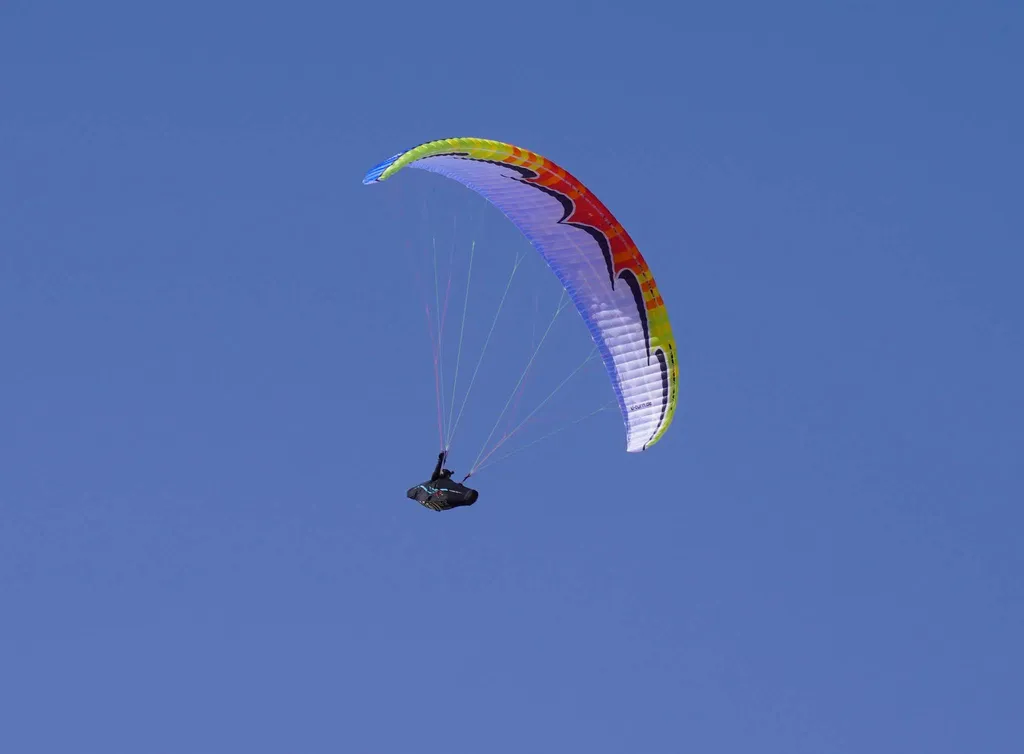
U-Turn Vision (S) — When an Aspect-Ratio-6 High-B Flies Like a Mid-B
What the Vision does well is not in doubt: glide at the top of the high-B field, a speedbar that stays usable in turbulence, and a mildness of behaviour you wouldn't expect from an aspect ratio of 6. If even the recovery from a collapse feels like a wing one class below, then this glider didn't trade stability away to buy performance. But mild is not the same as easy. The span of an aspect-ratio-6 wing is still there, and the performance it offers is only returned to the pilot who can keep the bar pushed in turbulence and manage pitch with the C risers. Without that skill it stays a B that flies well. With it, it removes the reason to move up to a C for quite a while.
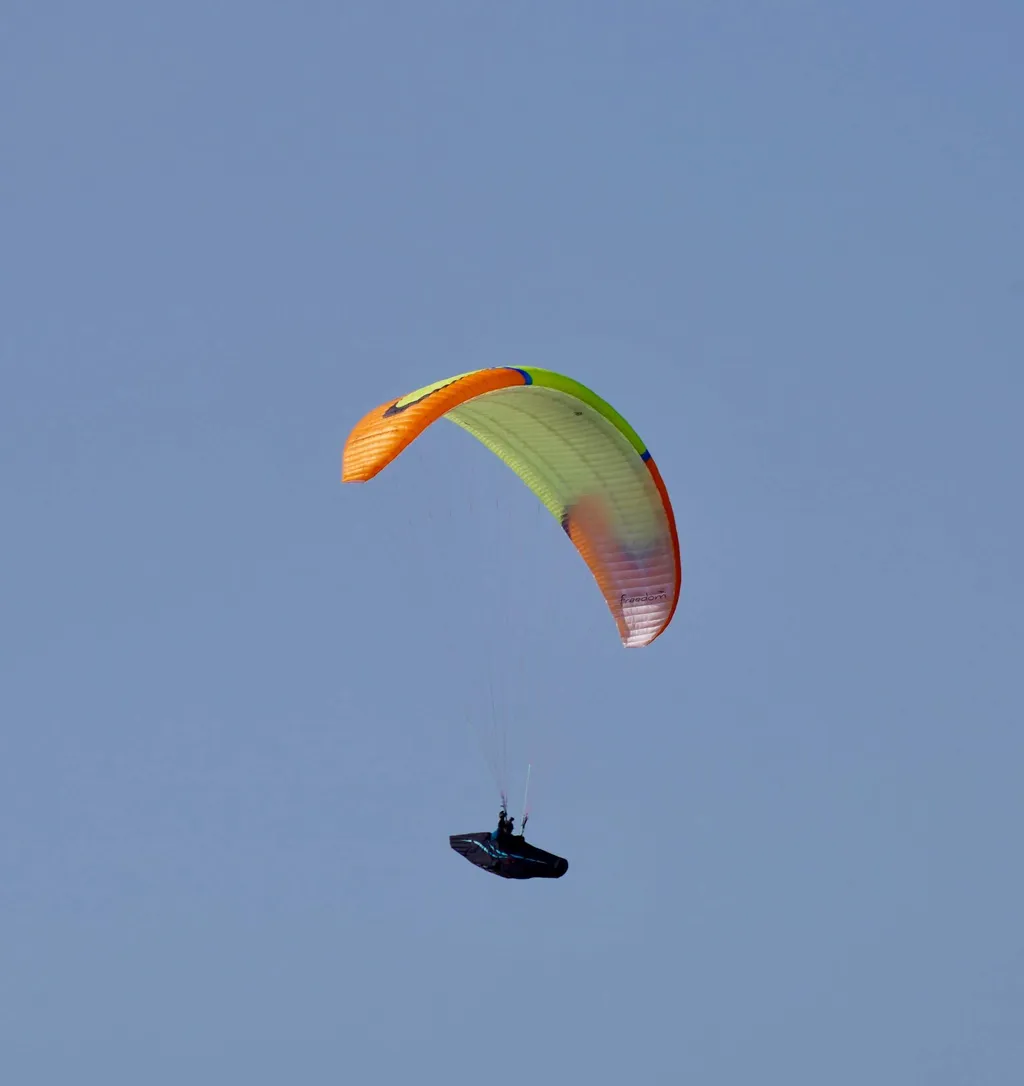
FLOW Freedom M — A Mid-B That Comes Alive at the Top of the Range
The strengths are clear. With almost no pitch and well-damped roll, there's little wrestling to be done in rough air. Big ears bite, the stall speed is low. For a pilot whose first worry is the landing field and the descent rather than a glide figure, that is far more reassuring than a number. The stability has a price, though. Handling and agility are moderate, trim speed is below the Mentor 6, and the glide sits mid-pack in the B category. Nor can you skip past the fact that the M felt "fairly big" at 100kg all-up. Fly it light and this wing doesn't get gentler — it gets duller. This is not a wing for pilots hunting sharpness. Load it properly, right up to the top of the range, and only then does the Freedom show you who it is.
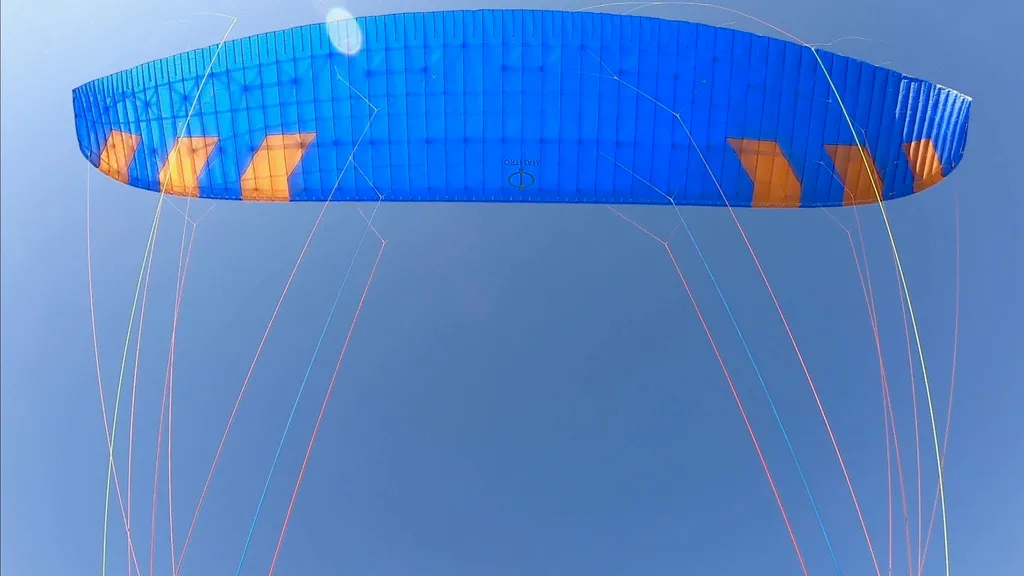
PHI Maestro 21 — A High B That Only Opens Up for Precise Hands
The strengths are unambiguous: 10cm of linear brake, a climb that doesn't get pushed back in strong lift, and a glide angle that stands next to the best B wings out there. On paper, this is a wing brushing up against C territory. The reason it isn't a beginner wing comes from exactly the same place. A short, linear brake is a weapon in precise hands — and in imprecise ones, it's a channel that amplifies every mistake. So this isn't a wing to pick off a certification chart. Grab it expecting an easy B and it will surprise you; grab it ready to read the core, load the wing and push, and it hands back more than its class suggests. Not an easy glider — a glider that repays exactly as well as it is flown.
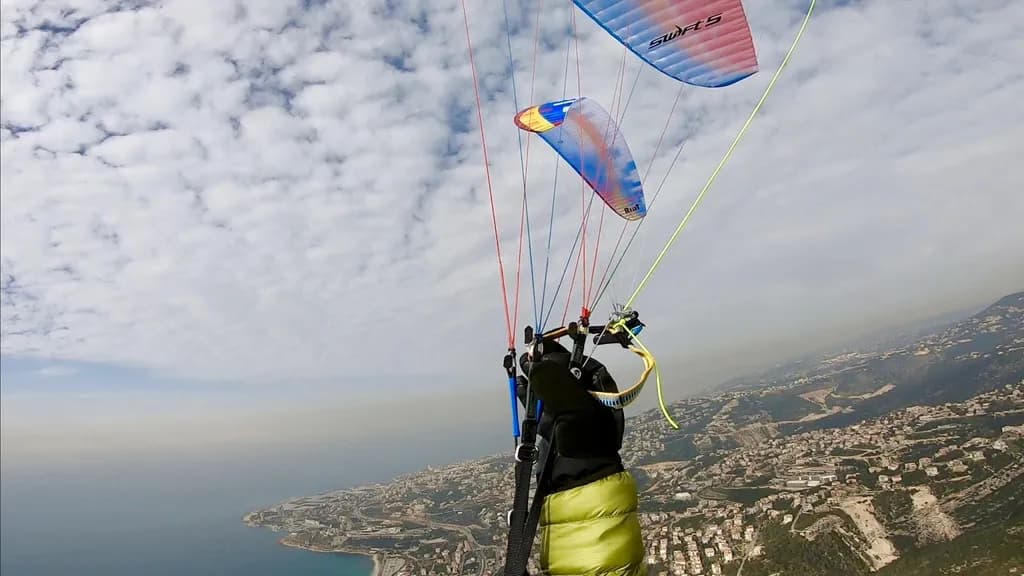
BGD Riot S — A Light Wing That Trades Glide for Trim Speed Against the Swift 5
That last line reads like praise, but it is in fact an exact summary of the wing's character. It concedes a hand's width of climb and a hand's width of glide to the Swift 5, and what remains in return is 2 km/h at trim and a sharper turn. Judge on performance figures alone and the Riot S loses. Judge on the feel you'll be holding all day and the story changes. So the choice is simple. For the XC pilot who wins on maximum glide, the Swift 5 is the honest answer. For the pilot who wants light weight, quick cruise and a wing that likes to be turned — all at once — the Riot S gives back more than it takes.
ADVANCE XI — A High-B That Makes No Excuses for Being Light
Choosing a lightweight wing usually means giving up either weight or performance. The XI refuses that trade. It holds its own on glide against the Mentor 5 XS, it is sharper than the Rush 5 S in a thermal, and its brake gets lighter while carrying more information, not less. That character is selective, though. A linear, information-rich brake only earns its keep with a pilot who can read what it is saying. The same goes for wing loading: this is not a wing that punches through the air the way the Iota 2 does, so load it lightly and the forward drive — its real strength — dies with it. A wing that pays you back in performance for the walk up. But only if you can read what the brakes are telling you.
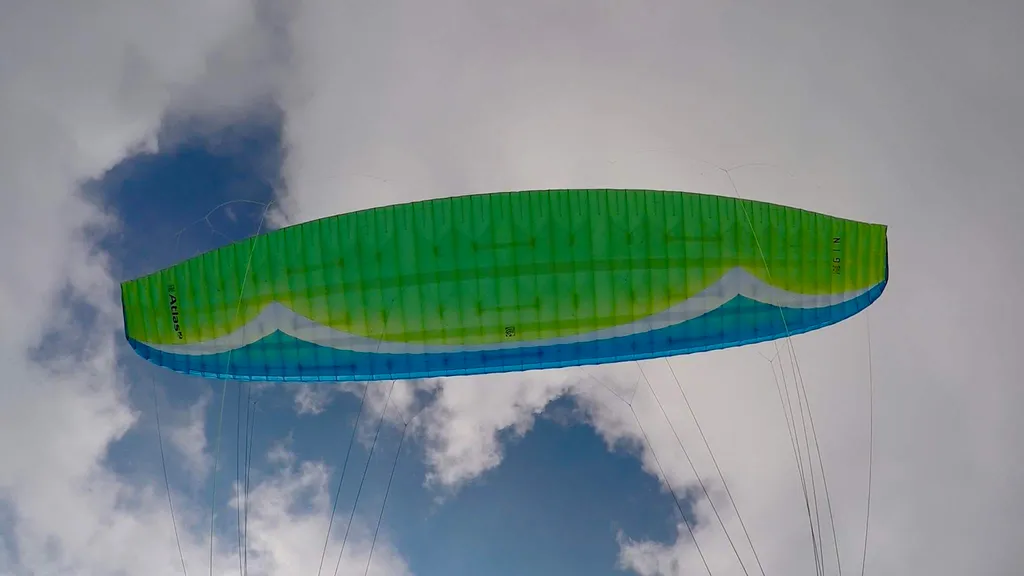
Gin Atlas 2 S — An Easier Low B That Keeps Its Feel
What this wing leaves you with is not performance but headroom. In the same turbulence it asks less of your hands than an Ion 5, and 25–30cm of brake is enough to hold the core precisely. Glide is mid-pack for a low B, and 7km/h over trim is not a wing that settles anything on the speed bar. That restraint is the design intent. What a low B pilot actually loses is not a few percent of glide — it is the concentration burned in rough air. The Atlas 2 leaves that concentration intact, and the pilot spends what's left looking for the next thermal. There is nothing here to frighten a pilot fresh out of paragliding school, and enough response left over that several seasons together won't get dull.
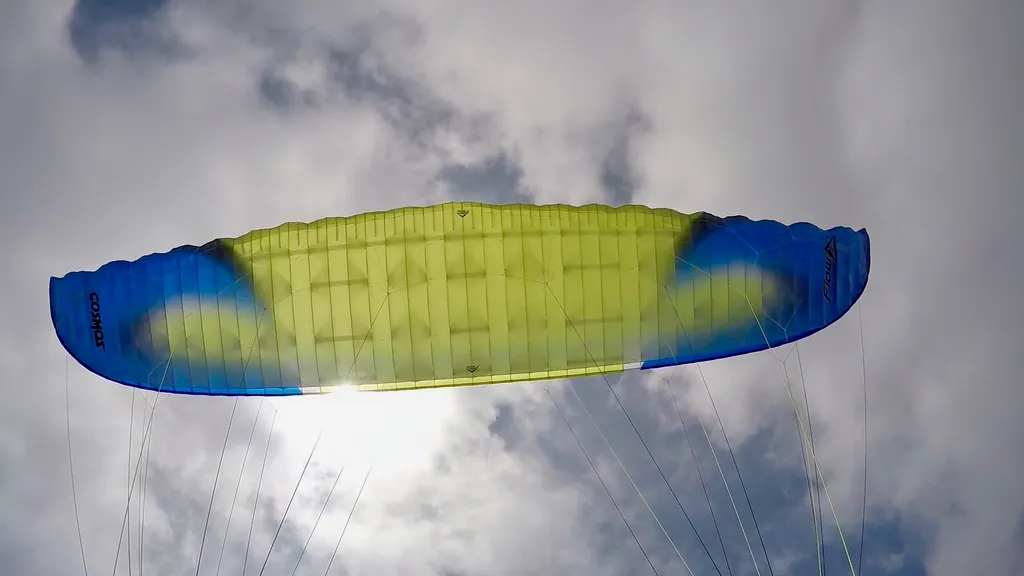
Flow Cosmos (S) — The Mid-B Whose Thick Lines Tell You Everything
What the Cosmos does well is easy to name. It launches quietly, it doesn't chatter more than necessary in turbulence, and in a thermal it climbs close to an Ion 5 XS. Internal pressure is high enough that big ears take a firm pull to go in, and induced collapses recover as mildly as an A's. This is a wing that buys the pilot time to think. The cost is glide, where it gives a little away to the Ion 5 — and the fact that the cause is the thick lines explains the whole character of the wing. Flow traded a few percent of performance for lifespan and price. For a pilot who wants to match the glide of the competition, that is not an answer. For a pilot looking for a wing that will fly several seasons without going soft, at a sensible price, the thick lines aren't a flaw. They're the reason.
Skywalk Tequila 5 (S) — A low-B that trades agility for calm
It launches easily, it moves little, and it does not surprise the pilot. That the air is quieter overhead than on a Buzz Z5 or an Ion 5 is, on its own, reason enough to buy for a pilot who has just left paragliding school. The price is plain. It is less agile than its predecessor, and its glide sits honestly on the low-B average. Come to it expecting bite and performance and you will be disappointed. The Tequila 5 does not test the pilot. It looks after the pilot while the skill accumulates — and when it has done its job, it quietly makes way for the next wing.
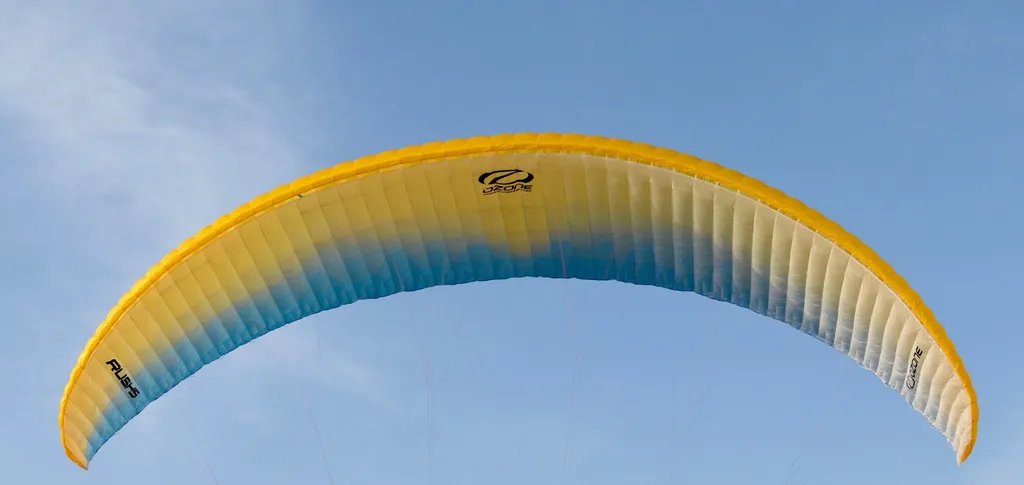
Ozone Rush 5 MS — The Comfort Ceiling of the High EN-B Class
The Rush 5's case is a simple one. It glides with the very best of the high-B class, and it asks for less piloting to keep that glide. A wing that needs fewer hands in turbulence is a wing that leaves you some energy for the back half of a long XC. Comfortable, of course, doesn't mean beginner-friendly. The slow nil-wind launch and the higher bar pressure than its predecessor both say the same thing: this wing still sits at the top end of EN-B. For a pilot with two seasons behind them, it's a safe way to find out where the performance ceiling actually is before stepping up a class.
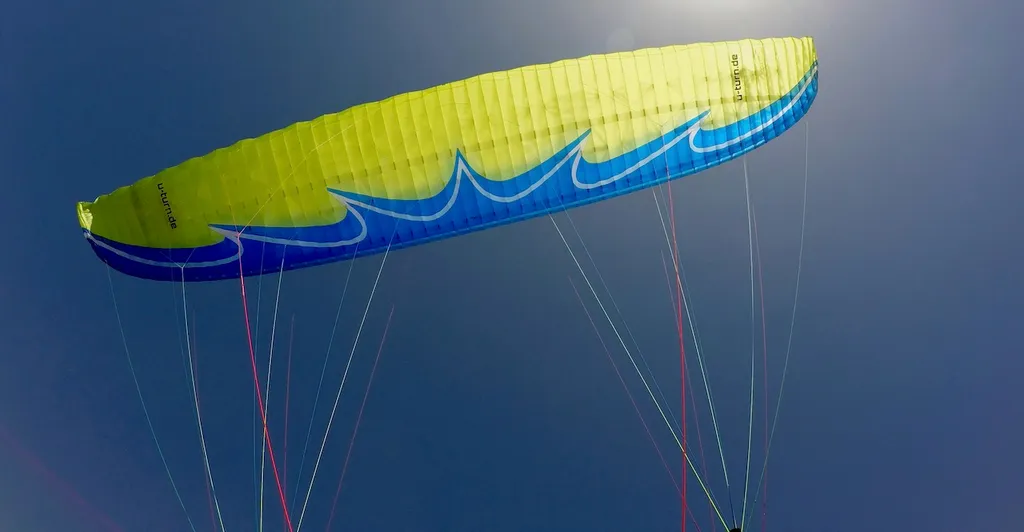
U-Turn CrossRock (S) — A High B That Keeps Up With the Mentor 5 at Half the Workload
Some pilots want high-B performance but have no appetite for high-B tension. The CrossRock aims squarely at them. Holding the Mentor 5's glide while halving the workload means the concentration you save goes into finding cores and choosing lines. Over a long flight, that gap widens far beyond anything a performance figure shows. Just don't mistake its soft character for slackness. This wing was proven in strong conditions, and its benchmarks came from the class above. It wasn't built so you could fly comfortably — it was built so that, being comfortable, you could go further.
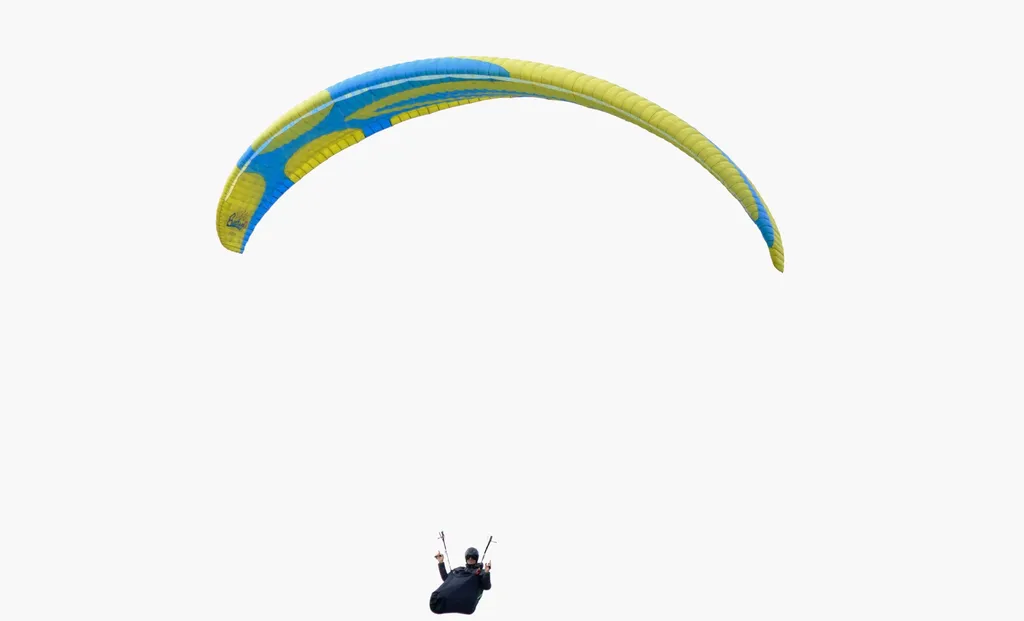
ICARO Buteo — A High B That Wins on Glide
The Buteo's strengths are plain. A glide that holds within 5-10m of C-class wings over 7-8km, and Iota 2-quick trim. Comfort is what you'd expect from a high B, and big ears go in cleanly and come out on their own without input. Most of what a pilot needs to put distance behind them in XC is here. The price is paid at the fingertips. The Chili 4 XS and the Mentor 5 S are more agile, the Chili 4 S floated better in very weak lift, and reactions in turbulence come a beat late and soft. Look elsewhere for the pleasure of carving a tight core. Where this wing gives your money back is the long straight line — climbing out in a solid thermal, then pushing on to the next cloud.
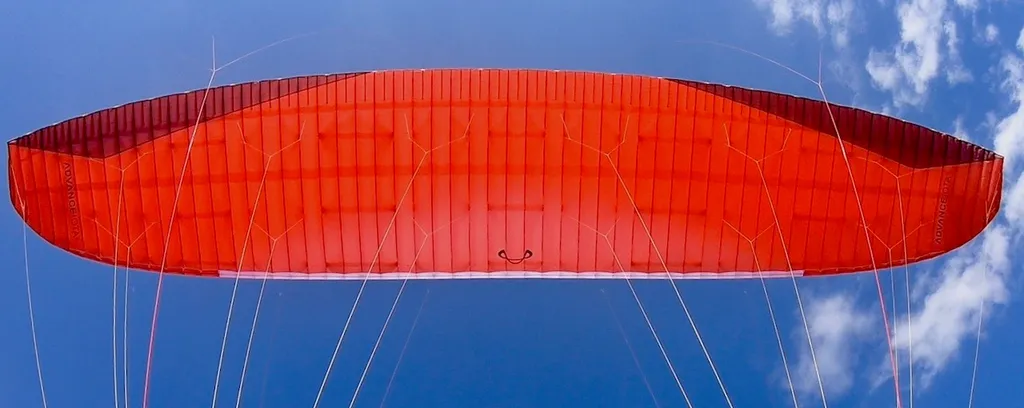
ADVANCE Iota 2 (25) — A High-B That Traded Playfulness for XC
The wing's strengths form a single chain. It banks height in weak lift, then turns that height into distance on full bar without ever getting nervous. Frontals go in fairly deep and momentarily fold into a horseshoe, but the recovery is quick, and big ears reopen predictably. On glide alone, the verdict reaches up toward the class above. The price is just as clear: the toy-like feel the Iota 1 gave you. The brakes are neither short nor light, and the roll is tuned to report the air rather than to excite the pilot. A pilot who wants to play with the terrain and the core may miss that. For the pilot counting on the last thermal of the day to stretch the distance, that composure is the weapon.
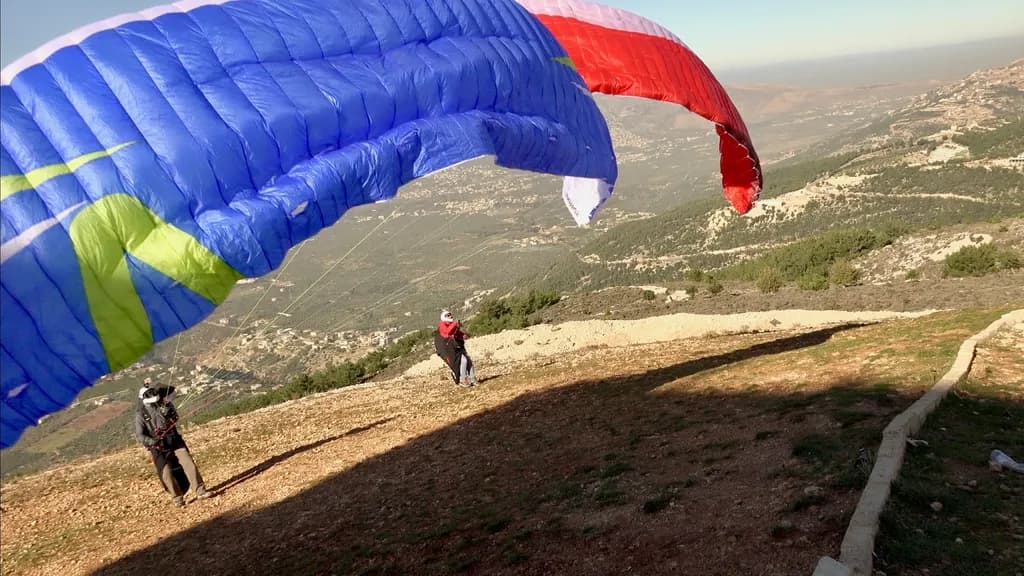
Skywalk Cumeo XS — Chili 4 Performance, Poured Into a Gentler Character
The Cumeo's strengths are unambiguous. It holds top-tier high-B glide and top speed while the brakes stay lighter, the canopy stays gentler, and the pack stays light enough to carry up a hill. A combination that keeps the performance and removes only the workload is rare. There is one condition attached: it has to be properly loaded. Bassil's view is that you need to be past 75% of the weight range before the pilot is genuinely driving the wing. Fly it lighter and you are no longer steering it — you are riding along on it. This is not a wing to load light for an easy time; it is a wing whose glide and agility come alive when you weight it and fly it precisely. The tame character is not a concession to beginners. It is the margin that saves a pilot's energy over a long high-B cross-country.
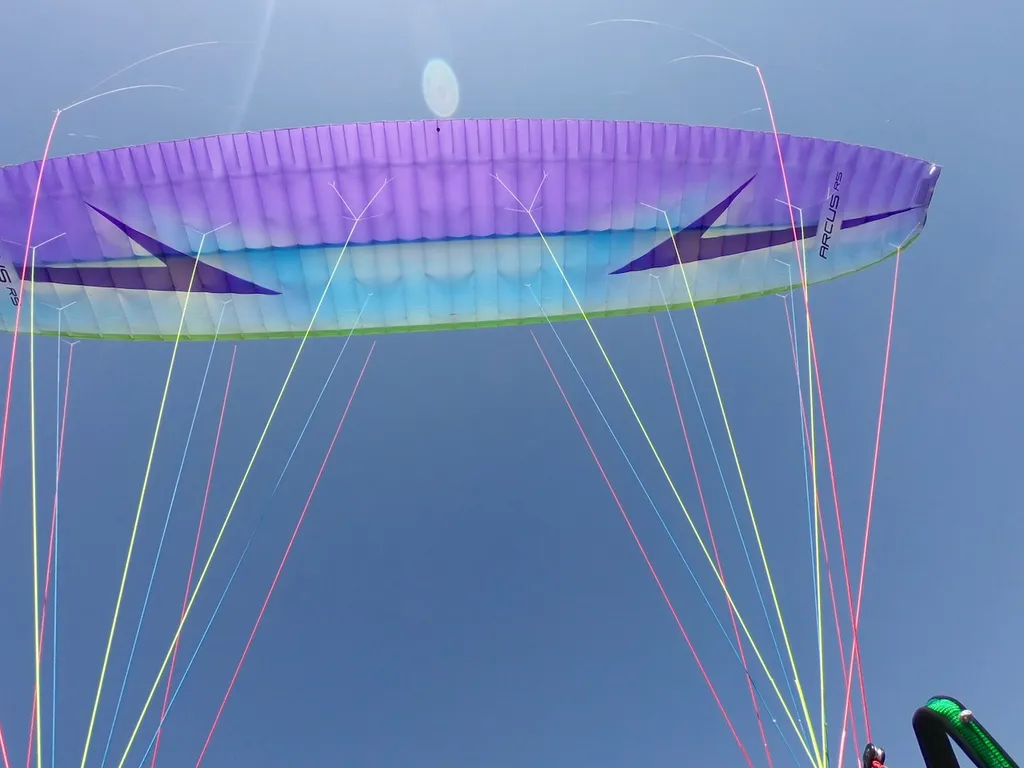
SWING Arcus RS (S) — Collapses Like an A, Glides Like a mid-B
What this wing gives a pilot is less about glide than about the seconds after a collapse. A large asymmetric that doesn't change your heading means the wing does not punish your mistakes. The decision to push into the core on a strong day gets cheaper, and enough of those decisions add up to XC distance. Even the claim that its glide belongs with the best mid-Bs only holds because this stability is underneath it. That comfort comes with a condition, though. Bassil is explicit about flying it above 70% of the weight range: lightly loaded, the Arcus RS loses the solidity that made it track on rails through turbulence. This isn't an easy wing you can afford to fly light — it's a wing that only becomes easy once you load it properly.
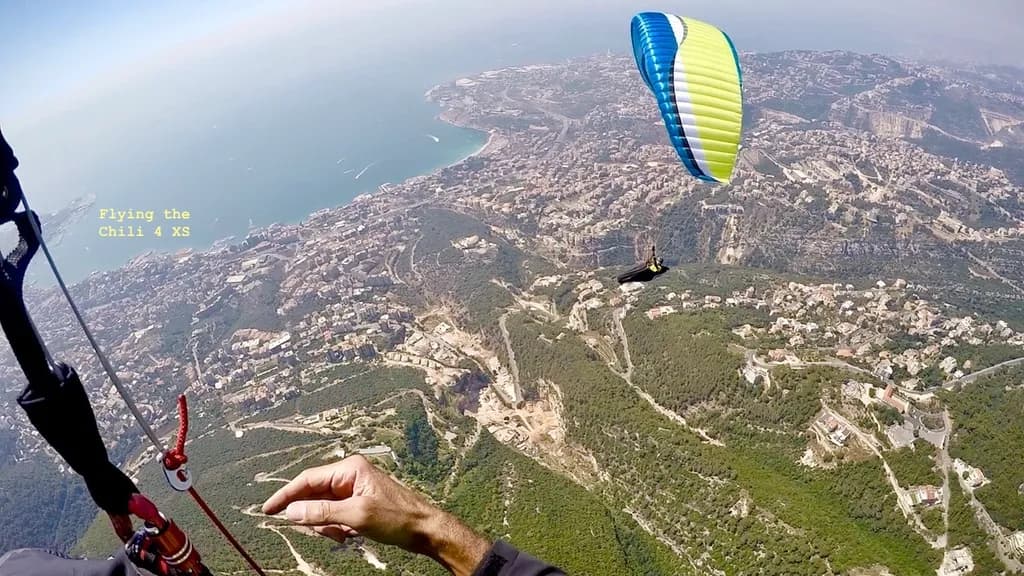
Air Design Rise 3 S — A Wing That Has Joined the High-B Front Row
The strengths are clear. Short, precise brakes let you wind the core in tight, and the wing's movements in turbulence die away on their own, so the pilot intervenes less. Those two things add up to a slight climb advantage over the Chili 4. Look at glide alone and nothing separates it from its rivals. But that advantage comes with a condition. The efficiency showed up at the top of the weight range. Fly it light and you leave the best part of the Rise 3 behind. This is not a wing that wins on glide — it wins distance by being loaded up and climbing.
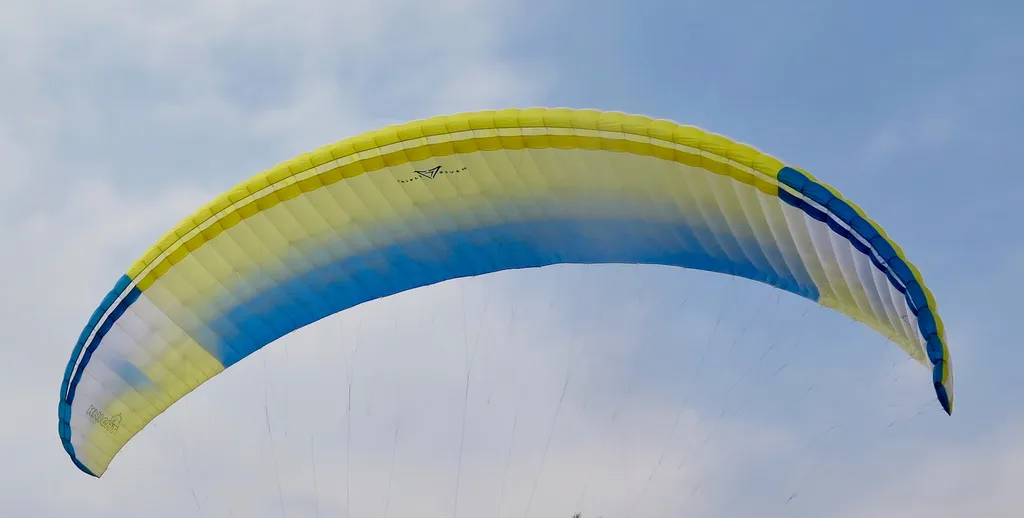
Triple Seven Knight SM — The Wing That Rewrote What a Low-B Can Be
Choosing a low-B usually means giving something up. Pick comfort and the handling goes vague; pick performance and it's your hands and shoulders that quit before the day does. The Knight refuses that trade. It gives you brakes that live at your fingertips and a climb rate that stands up to the best B wings, without shaving anything off the reassurance the class is supposed to promise. It doesn't win everywhere, of course. On full-bar glides the Rook 2 is still above it. What the Knight offers isn't a number on the speed scale — it's the reserve that keeps you flying to the end of the day. It's the kind of wing that has you walking back up to launch after you land.
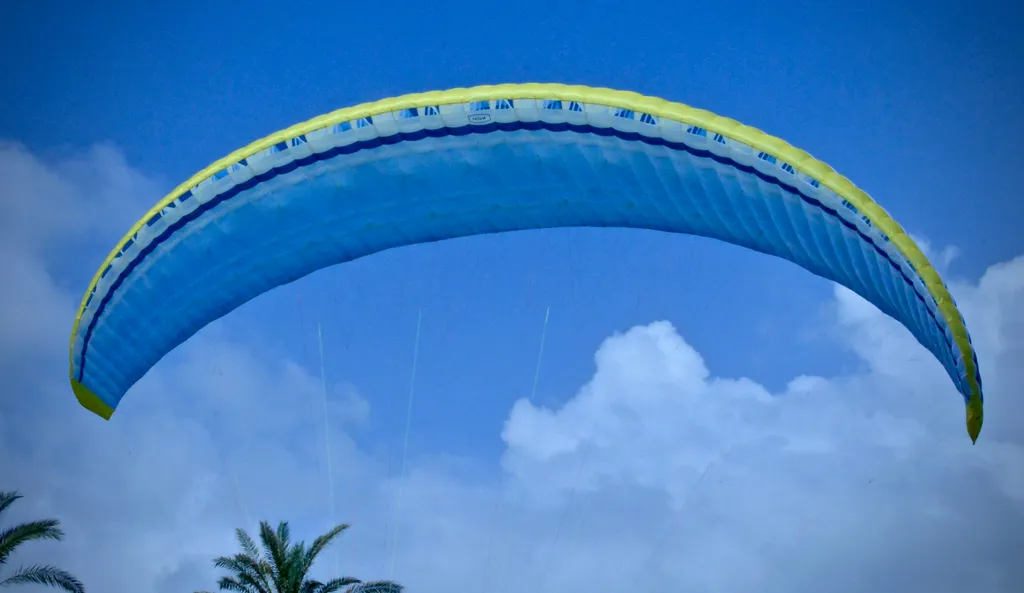
Nova Mentor 5 S — Redrawing the High-End B Baseline
What the Mentor 5 delivers lines up with the XC pilot's actual checklist. Climb that doesn't let a weak bubble slip past, comfort that leaves you less worn out in rough air, trim glide on par with the Chili 4. Exactly what's needed to carry a long flight, and not much else. What's missing is just as clear. Bassil himself rates its brake precision below the Mentor 2's. If you expect to feel your way into a core through your fingertips, this wing won't answer. Instead of exciting the pilot, the Mentor 5 chose to save the pilot's energy and send them further.
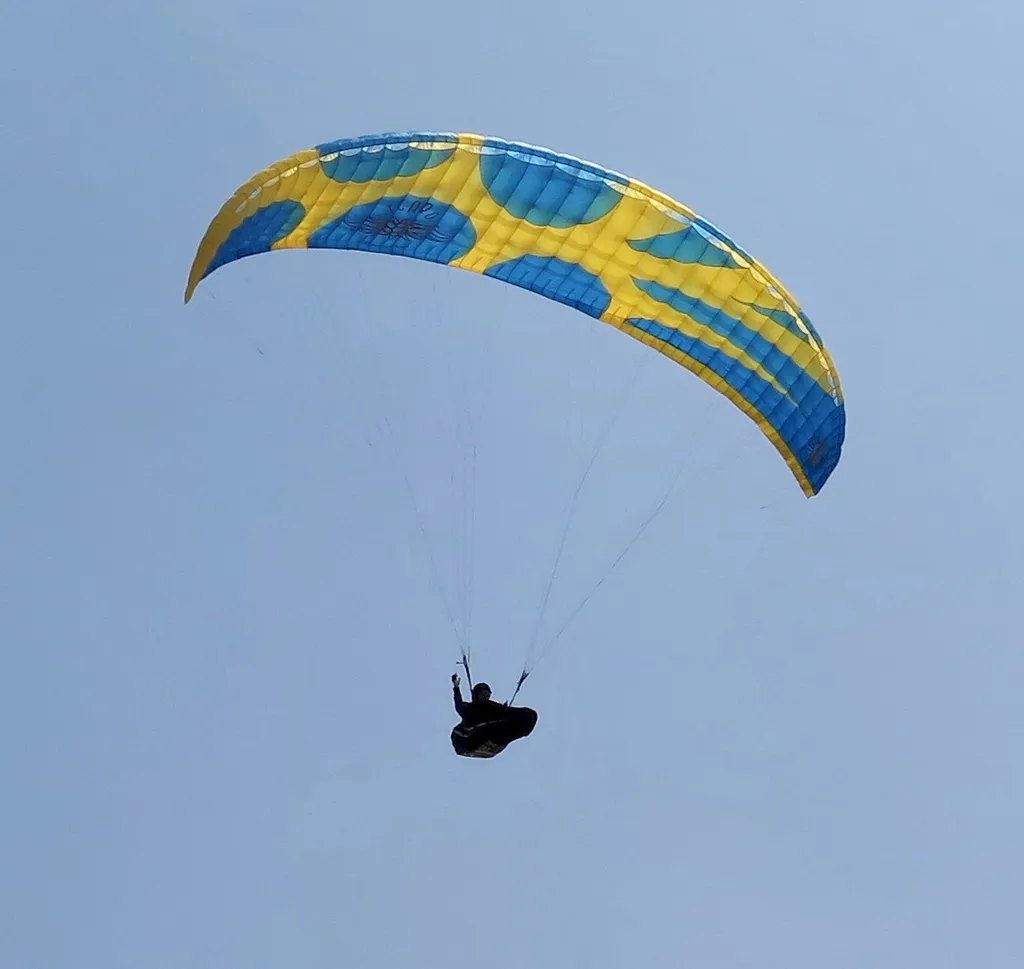
ICARO Gravis — A Mild B for the Weekend Pilot, But It Really Does Float
The strengths are clear. The Gravis keeps the passive safety of a mild B while leaving the brakes alive, it floats in weak bubbles, and it out-glides its own class. Big ears take a slightly firm hand to hold, but release and the wing recovers quickly on its own. It is the right combination for a pilot who wants safety first without being bored. Set your expectations precisely, though. Bassil's refusal to compare its glide with the Rook 2 and the Mentor 5 wasn't modesty — it was a line drawn. Buy a Gravis hoping to keep up with high-end Bs and stretch your XC distances and you will be disappointed. This isn't a glider that takes you further; it's a glider that keeps you in the air longer when conditions are weak. It is a design that understands what a pilot who flies on weekends actually needs.
NOVA Phantom — the Rolls Royce of the B class, built from 99 cells and a low aspect ratio
The Phantom's claim is unambiguous: the passive safety of a low B, with high-B performance laid on top. A low-B pilot can fly it without strain; a pilot stepping down from a hotter wing keeps the comfort and takes the performance of the B class ceiling along with it. Collapses recover easily, big ears go in readily and reopen quickly. The bill comes separately. Buoyancy in weak conditions goes to the Chili 4 and the Mentor 5, and on long glides through moving air the Mentor 5 stays ahead. The time and the price of weaving 99 cells are the pilot's to pay as well. The Phantom, then, is not a wing that wins every day. It is a wing that gets better as the air gets rougher — and for a pilot who wants to hold on to comfort without letting go of performance, it is the answer, provided they are ready to pay for it.
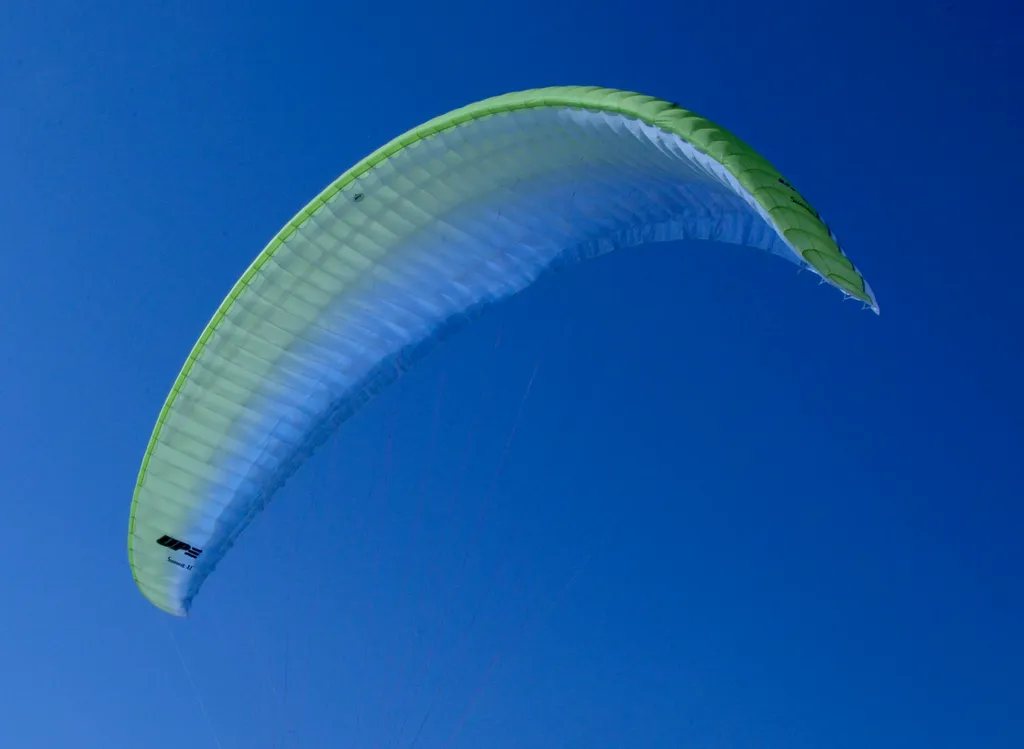
UP Summit XC 4 — C-Class Performance Under a B Certification
The strengths are unambiguous. It beats the Carrera Plus on headwind glide and trim speed, and the way it reads the air through the brakes reaches into X-Race territory. The problem is that this performance arrives wearing a B label. Here the B certification is less a device that protects the pilot than a psychological safety net — which is exactly why Bassil explicitly rules out pilots who have only just arrived in the B class. This is not a detour for pilots who don't want to move to C. It's the gateway that makes you meet a C-class wing under a B name first. If you've spent two seasons on a high B and you want more distance, this wing sits precisely where you are. If you reach for it because of the letter on the certificate, it will be the strangest wing you've ever flown.
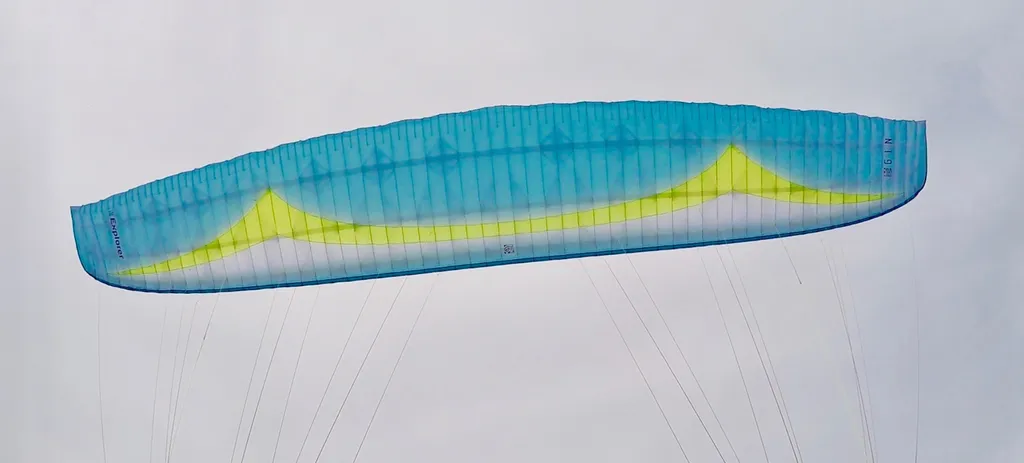
Gin Explorer — The Light B That Hides Its 6.1 Aspect Ratio
The Explorer's strength isn't speed. It is that Gin raised the aspect ratio without passing the bill to the pilot. The wing keeps the glide that 6.1 buys you while retaining mid-B damping and margin, and it doesn't drain you on a strong day. Its XC performance is nearly level with the Carrera plus, and Bassil argues the remaining gap is closed by pilot skill anyway. That said, this wing was never built to replace the Carrera's legendary climb and glide. It concedes a little speed pushing into a headwind core, and its top end isn't generous. For a pilot chasing one more step up the performance ladder, this is not the answer. For a pilot willing to give up that step, what remains is a day spent longer in the air, more comfortably, and further out.
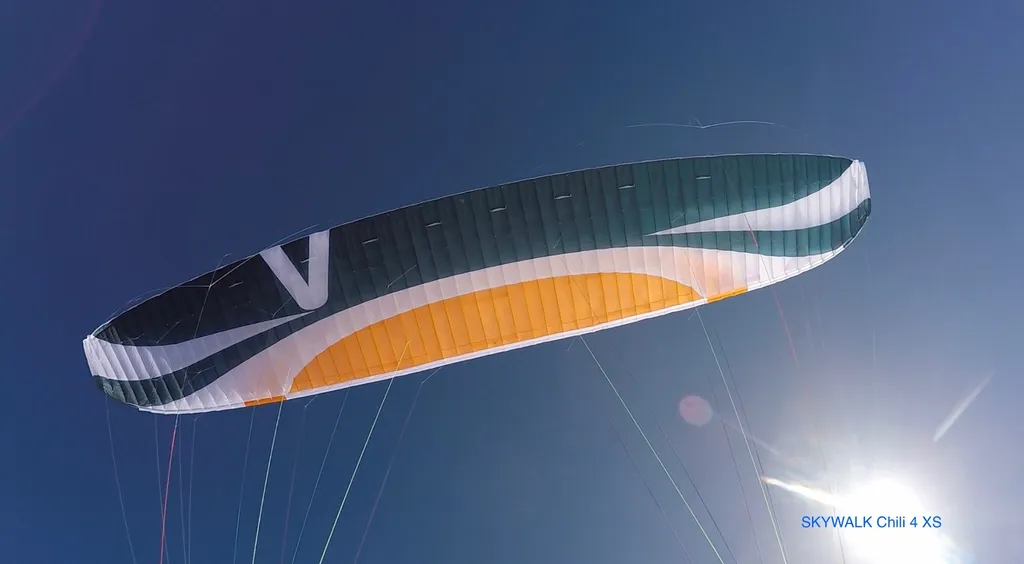
Skywalk Chili 4 — The Climb of the Chili 3, With the Glide of a Mentor 4
The Chili 4's strength comes from its lineage. It inherits the Chili 3's knack for latching onto weak thermals, and lifts the glide — the previous generation's weak point — to stand alongside the Mentor 4. The observation that the advantage shifts to the Chili 4 in moving air matters most to XC pilots. Real air doesn't stand still. The condition is just as clear. The line layout is technical, and flying this wing properly asks for a good B pilot. You get a taste of the higher class inside the B class, but you pay for it in piloting skill. This isn't a wing that's good because it's easy — it's a wing that gives more back to a pilot who can read it.
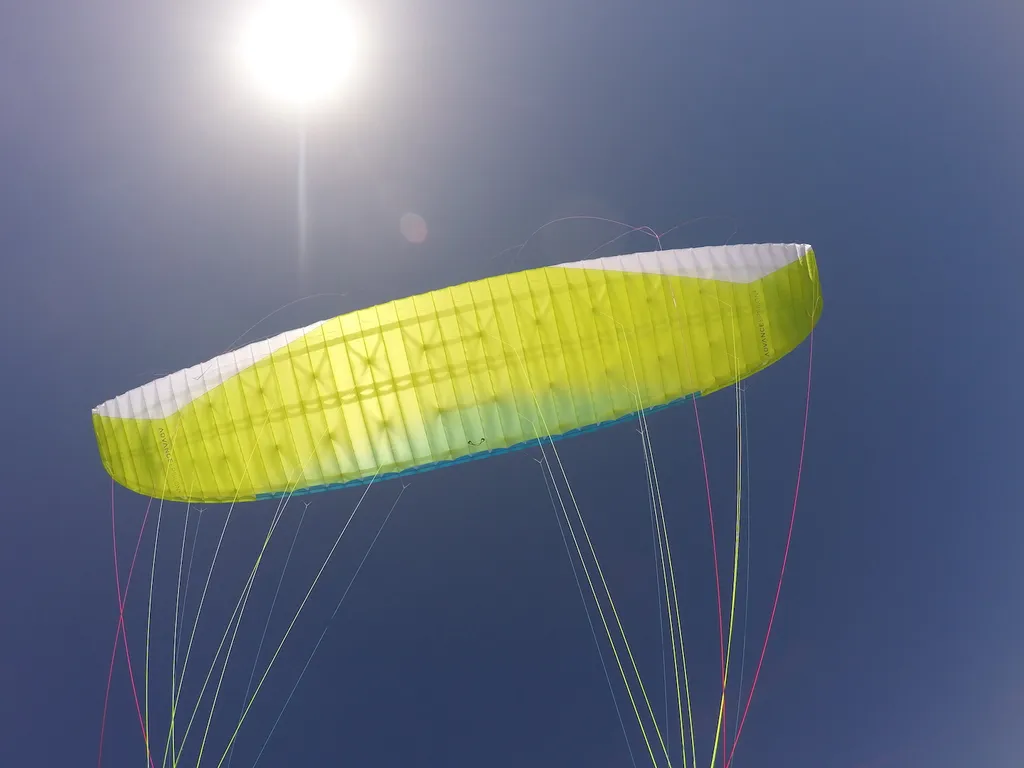
ADVANCE Epsilon 8 — Low-B Done Properly: The Wing as Polite Butler
The Epsilon 8's strength is not a peak score in any one column but the absence of flaws. Launch is quiet, the brakes answer the same way at 5 cm or 30 cm, and the information doesn't distort in rough cores. The glide sits near the top of the low-B field. That is the basis for Bassil's summary that this wing is everything a low-B pilot could want. At the same time, it promises no performance beyond its category. Rather than making you faster, it frees you to concentrate on turbulence and on XC decisions. For anyone looking to start their first cross-country safely, there are few better places to begin.
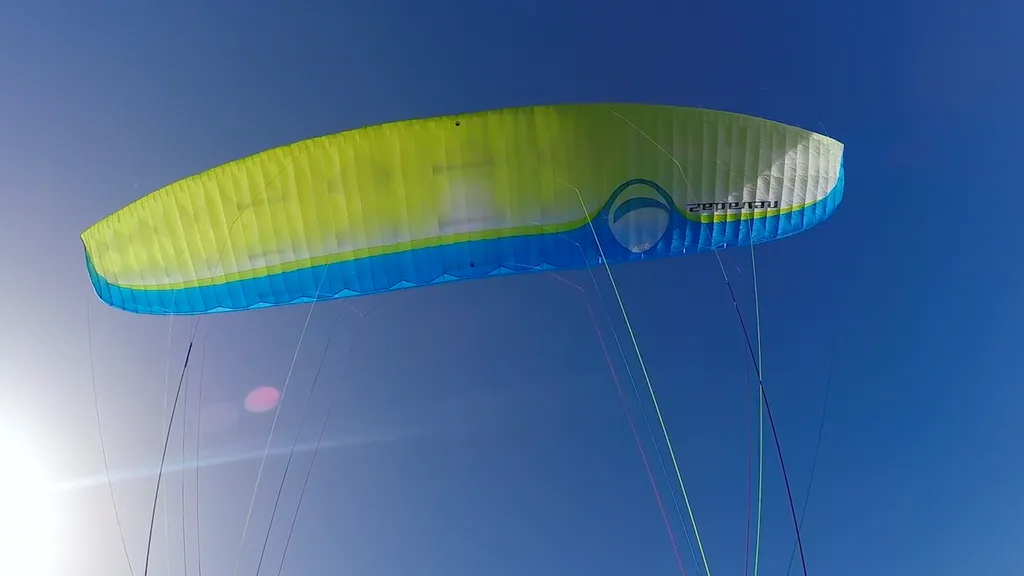
Gradient Nevada 2 S — A High B That Sells You Glide
The Nevada 2 S has two strengths: accelerated glide that is very good for the category, and weak-lift climb that survives being loaded up. Two things a distance-minded high B pilot normally has to weigh against each other, here in one wing. The cost is roll in turbulence. It moves more than the Rush 4, and active pitch control is a precondition, not an option. So the dividing line isn't taste, it's skill. A pilot whose hands move first in a strong core gets that effort back as glide. A pilot still waiting for the canopy to settle itself will be happier on another wing in the same class. This isn't a high B that sells comfort — it's one that pays the pilot who works.
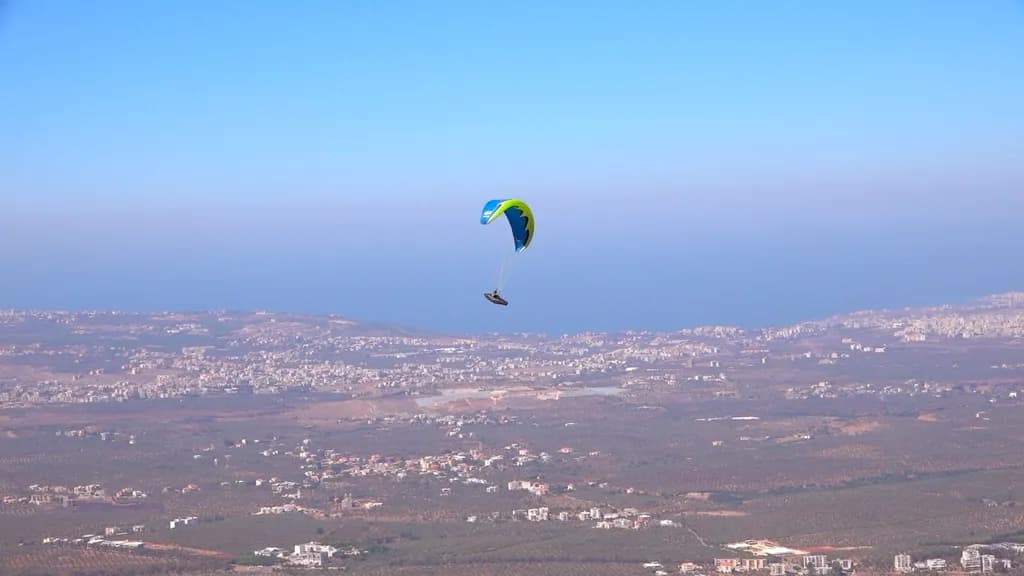
U-Turn Blacklight 2 S — A Mid-B That Keeps the First Generation's Climb and Files Down the Edge
Big ears go in easily, work efficiently, and reopen without delay. The response to turbulence sits between high-B sharpness and low-B bluntness — precisely where a mid-B belongs. Normally a wing this comfortable hands back some climb rate. The Blacklight 2 doesn't. The bill comes due in glide. Sitting in the middle of the B category becomes a hard limit the moment you are chasing a Mentor 4 or an Iota on an XC race. This is a glider that traded its place in the glide rankings for comfort and climb together. For a pilot who would rather grind patiently into weak thermals and win altitude first, that is a price worth paying.
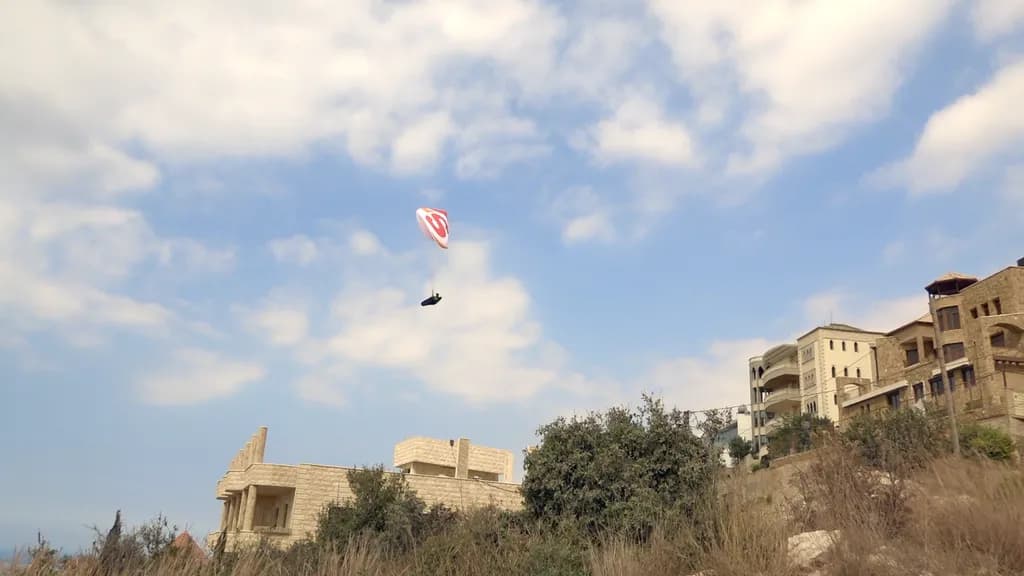
Supair Leaf — A mid-B That Competes on Comfort, Not Performance
The strengths are unambiguous. Low-B comfort in rough thermals, a climb rate that holds its own at the top of the B class, and brakes that answer precisely what you ask of them. Comfort, climb and handling together in one package is not a common combination in the mid-B segment. The condition is glide. The front half of the mixed B group — and that's where it stops. For a pilot who wants to go glide-for-glide with the best mid-Bs and stretch XC distance, this wing will come up short. The Leaf was not built to win on a spec sheet. It trades a few percent of performance for a better day in the air. If that trade makes sense to you, few mid-Bs make the day feel this short.
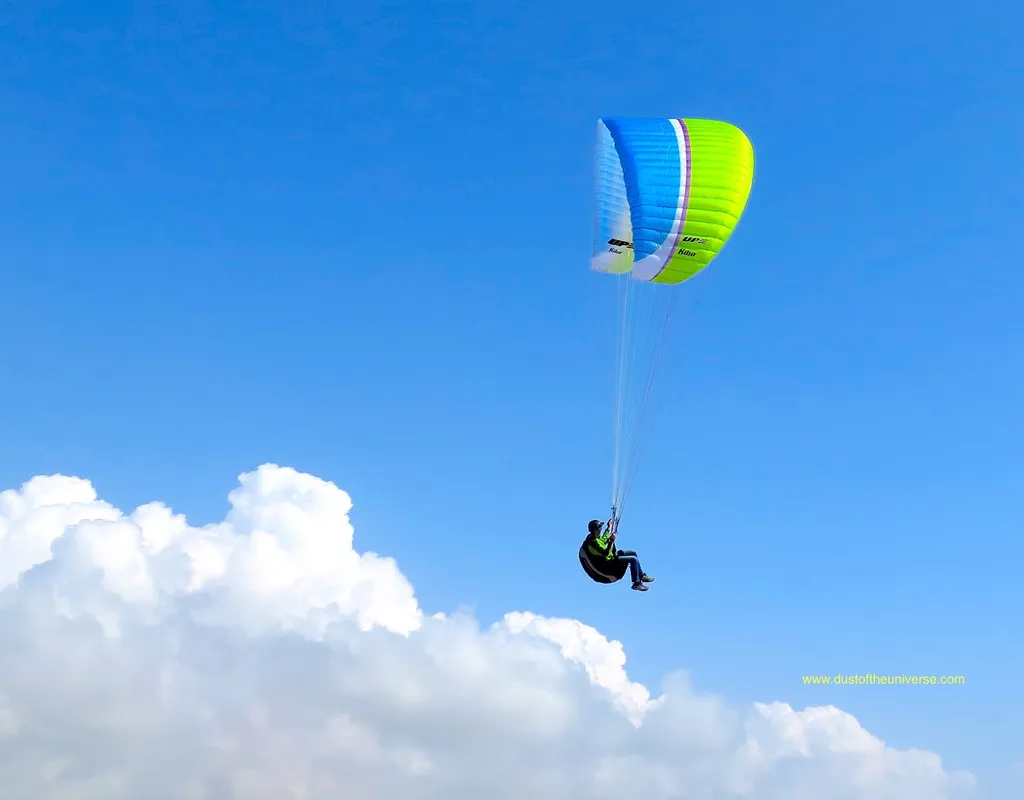
UP Kibo SM — A B That Doesn't Trade Performance for Comfort
The Kibo's case fits in a single line: it keeps the comfort without giving up handling or performance. A compact B of 5.7 aspect ratio trading blows with the latest B+ crowd in glide and climb, holding the top half — that alone is enough to make it interesting. Just don't read that comfort as "an easy wing." Remember it was drawn out at 93kg, near the top of the certified range. Fly it lighter and the pressure and turn precision the Kibo is praised for start to thin out. This is not a wing that flies for you. It gives back the attention you would have spent fighting the air, so you can spend it on the next thermal instead.
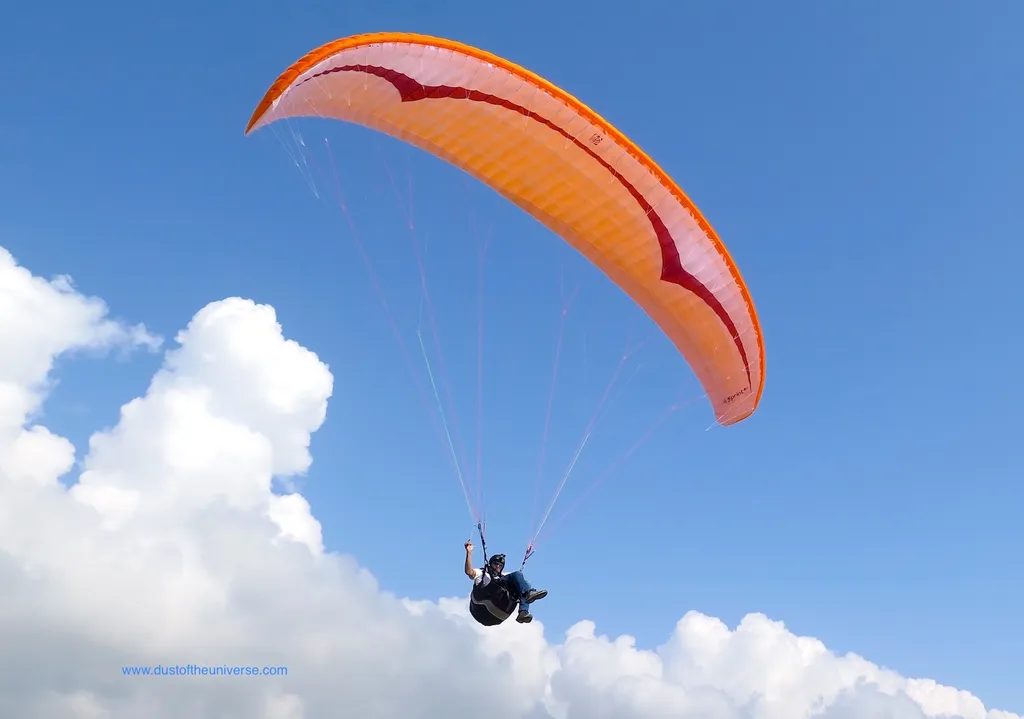
Gin Sprint 3 M — Comfort and Glide Near the Top, Undone by Speed
What the Sprint 3 M does well is easy to name. Its trim glide beats the Rush 4 and Summit XC3, its collapse behaviour asks nothing of the pilot, and launching takes almost no work. This is a wing you can fly all day without it wearing you down. What holds it back is 7–8 km/h over trim. In this class that number is hard to paper over with other virtues, and the XC pilot who has to push bar through every headwind leg will meet that wall again and again. It was never built to unseat the leaders. It was built to borrow their comfort. Too little for the pilot who buys distance with speed; more than enough for the pilot who simply wants to stay up, and stay comfortable, for a long time.

Mac Para Eden 6 — B-Class Moves, High-B Glide
What stands out here is the company it keeps. Bringing a B-class wing up against a high-B trio — Nyos, Mentor 4, Rook 2 — and holding its own says something about how far Mac Para pushed this one. Nothing comes free, though. Chasing the Eden 5's glide and speed means the wing asks for more active piloting, and there's a warning about a possible tuck if you rush the exit from a spiral. For a pilot who wants high-B glide inside a B-class certificate, that's an easy trade. For one who wants an easy-handed B, look elsewhere.
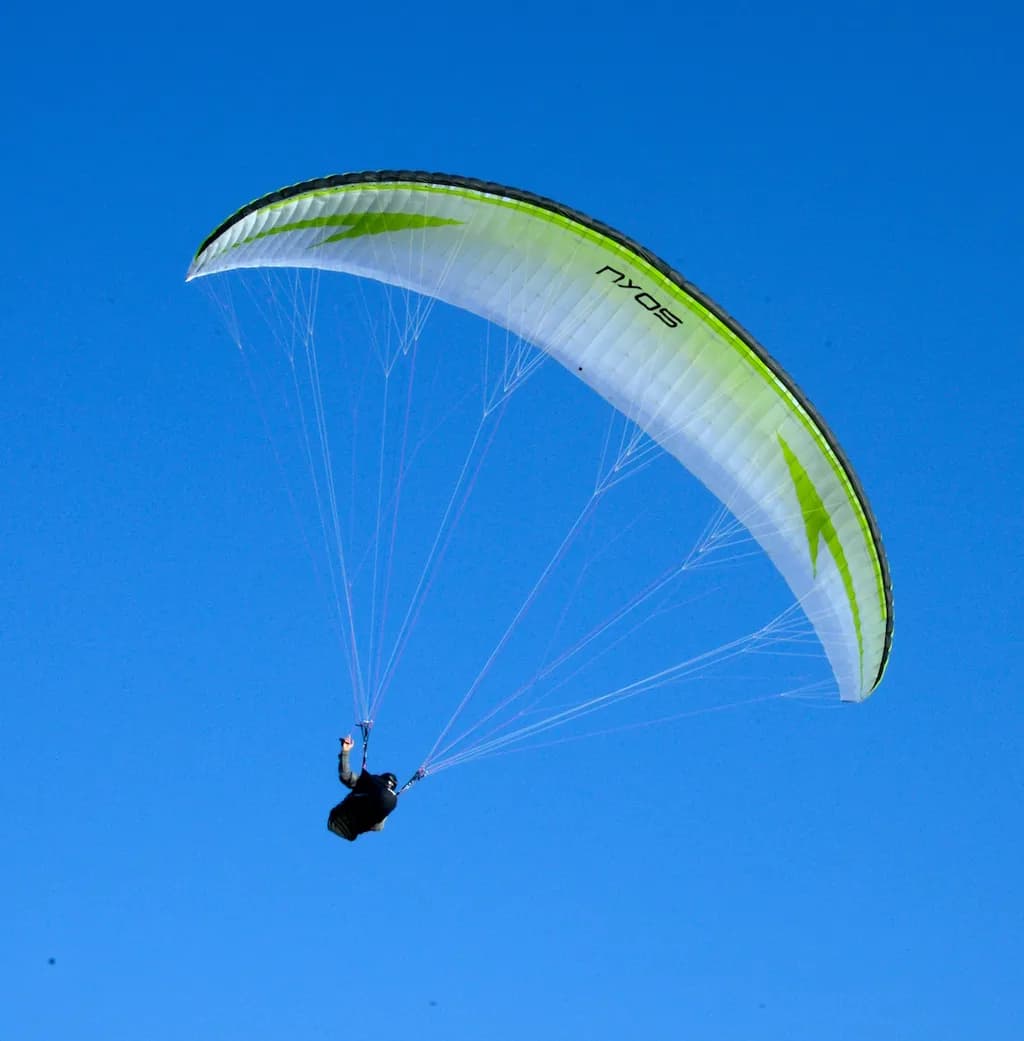
SWING Nyos M — An EN-B XC Wing as Smooth as a Limousine
The word that best fits the Nyos M isn't a spec — it's "limousine." Hit the speed bar and noise doesn't climb with it; get shaken in rough air and the nose sorts itself back out. The comfort and composure behind those two facts probably explain why so many people mistook it for a C-class wing on looks alone. That comfort doesn't hold up everywhere, though. In very weak thermals it doesn't grip the core hard, so on a lazy, drifting day it can feel underpowered. This is a wing for an advanced B pilot chasing XC in strong Alpine air, not a gentle-weather wing for a beginner.
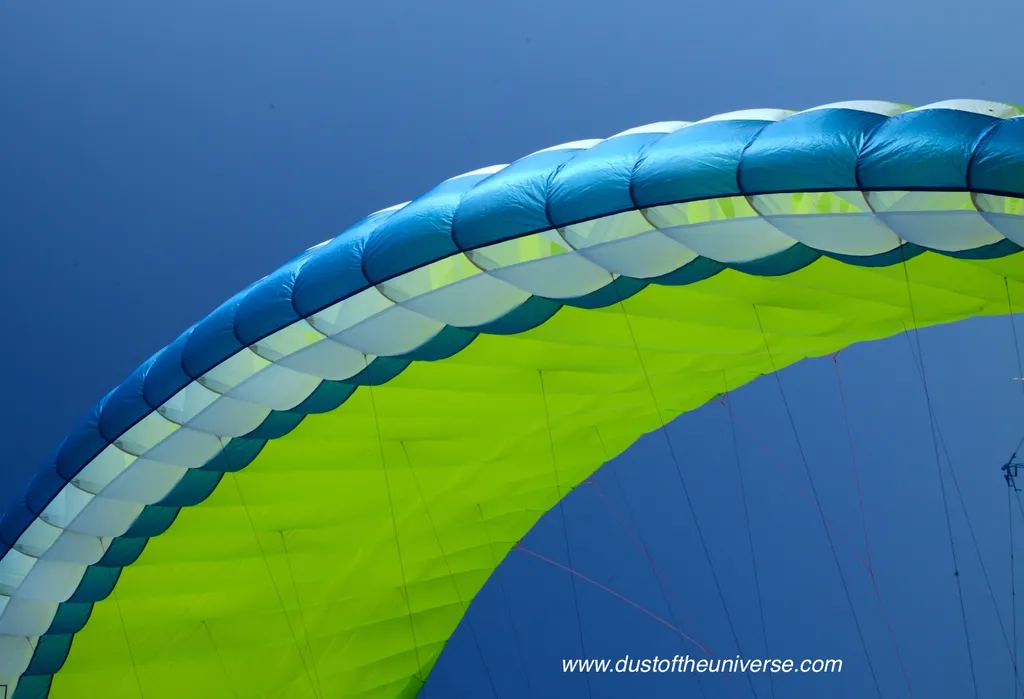
Nova Ion 4 S — Toughness Behind a Low-B's Speed Bar
In the low-B category, "comfortable" tends to come bundled with "slow." What's interesting about the Ion 4 S is how it breaks that equation. Climbing like a spring in rough thermals, and the glide angle once the bar comes on, both reach further than this class usually delivers. None of that changes what the wing is at heart. Launch is still easy, roll still doesn't shake the pilot, brake pressure still stays comfortable. Nova simply added a dose of XC ambition on top of the toughness the Ion line has held onto all along.
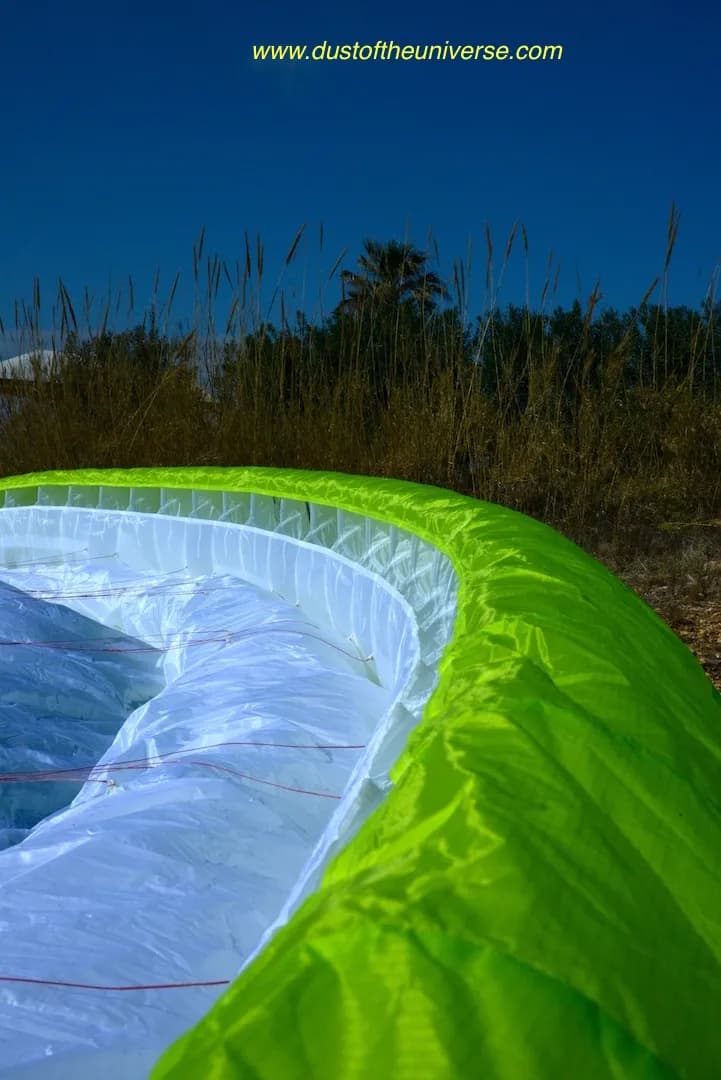
Ozone Buzz Z5 — High-End Feel Inside a Low-B
What you expect from a low-B is safety and comfort, not brake feel. What's unusual about the Buzz Z5 is that it goes after that assumption anyway. Travel stays long and forgiving, but the response inside it holds up against higher-B wings without falling behind — meaning you can fly a low-B and still get precision at your fingertips. That combination matters most for a pilot who doesn't have many hours logged yet. Normally, chasing both safety and feel meant moving up a class or two; the Buzz Z5 compresses that path into a single wing. It lets a pilot start refining, at the low-B stage, a sense they'd otherwise only pick up after moving on.
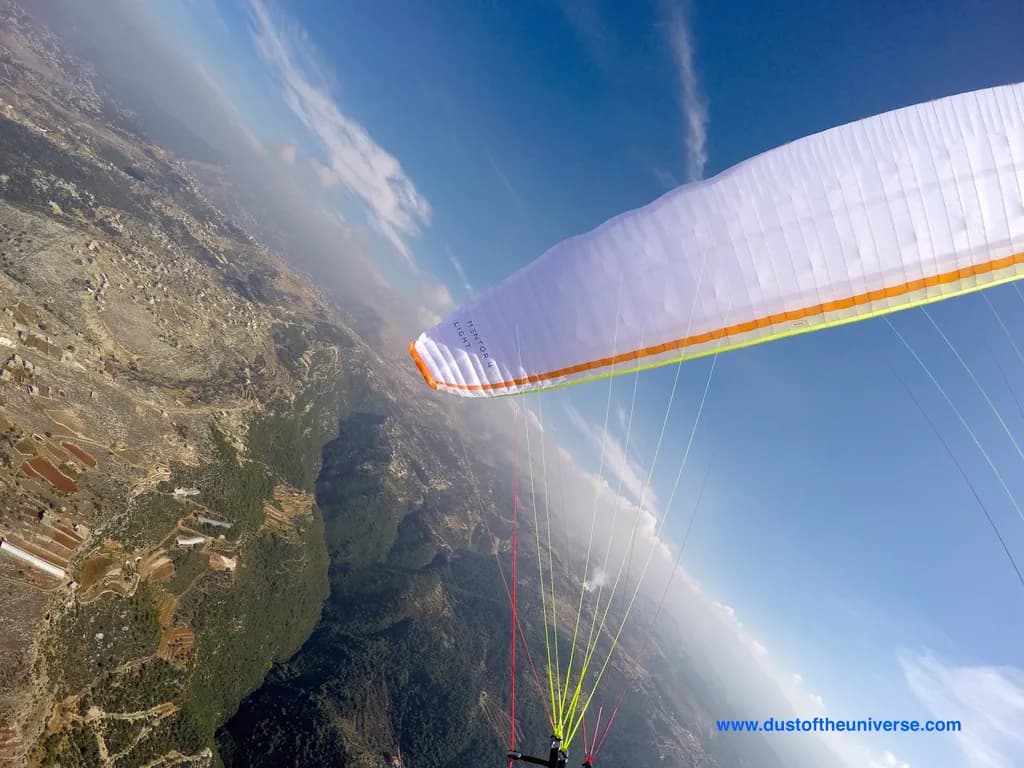
NOVA Mentor 4 Light XS — Lighter, Yet It Climbs Even Better
A light wing usually pays for its thinner fabric with a weaker climb — thin cloth flexes more, and a flexing canopy holds the core less firmly. The Mentor 4 Light dodges that formula. It climbed better than the standard version rather than worse, and that alone gives this wing a reason to stand out beyond just being "a lighter M4." That lightness comes with a catch, though. Peak performance shows up closest to the certified weight ceiling. A pilot who picks the Light version specifically to cut weight ends up needing to load it near the top of its range to get the most out of it — a small irony between why you'd reach for this wing and how you actually fly it well.
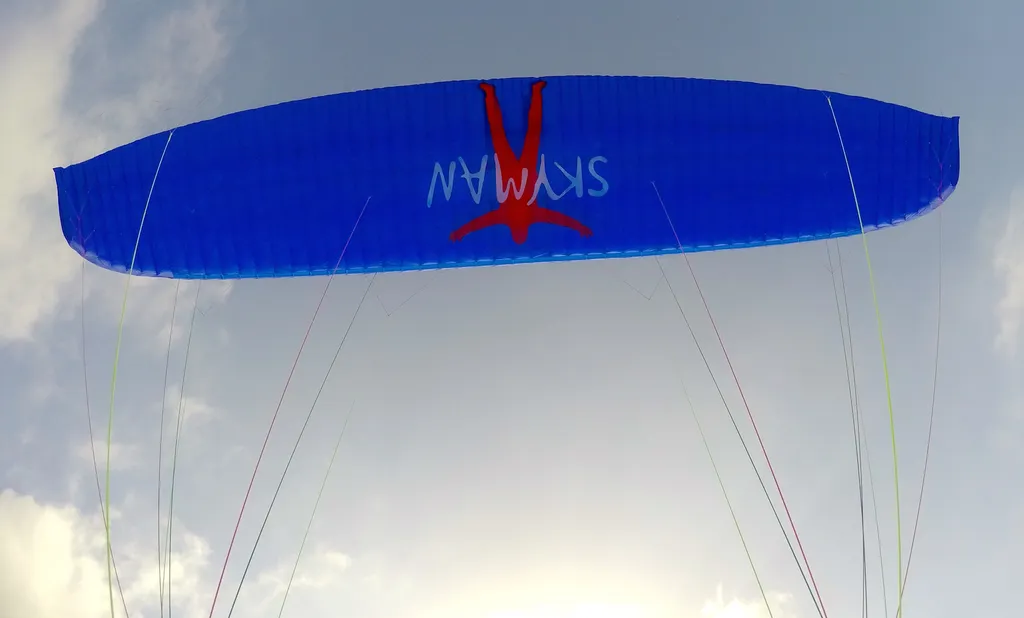
SKYMAN Cross Country S — High-B Performance in a Light Frame
Running just seven risers total — 2 A, 3 B, 2 C — might look like a cost-cutting move at first glance, but it reads more like a list of what this wing refused to give up. The short brake travel and agile response stayed put; the only thing scaled back is the liveliness that belongs to the Cross Alps. A comfort-first wing often skimps on fast descent tools, but the Cross Country doesn't. Pulling -5m/s off a single set of big ears means this wing filled in a gap that light, gentle canopies usually leave open.
GIN Atlas X-Alps S — Lighter, Yet Still a Gentle Low-B
The biggest worry when choosing a light wing is usually manageability and durability. Thinning the lines to cut weight often makes a wing more sensitive and demanding — that's the common trade-off. The Atlas X-Alps sidesteps it by keeping line gauge standard. The S size still comes in at 4.4kg, but launch and handling stay indistinguishable from a standard-weight wing. For a pilot who wants to cut hike-and-fly gear weight without giving up the gentle character of a low-B, this is worth a look.
Skywalk Arriba 3 (S) — Tequila 4's Fun, Carried Over in a Lighter Low-B
A light version usually trades away some feel or stability along with the weight. The Arriba 3 goes the other way. Same specs as the Tequila 4, just lighter fabric — yet the character turned out more agile and dynamic, not less. Worth noting too: it's low-B, and its trim-speed glide closes in on the Chili 3. For a pilot after a low-B with real feel, without moving up a class to get it, this is where the answer is.